

『Garden Hose Flow Meter with Automatic Shut Off: Smart Backyard Valves』Related information(clamp on meter|electromagnetic meter|venturi meterrotameter|orifice meter|ultrasonic flow meter|mass flow meter|coriolis mass flow meter|coriolis flow meter|magnetic flow meter|magmeter flow meter|magflow flow meter|mag meter flow meter|electromagnetic flow meter|vortex flow meter|turbine flow meter|thermal mass flow meter|thermal flow meter|rotameter flow meter)
Quick Answer: A garden hose flow meter with automatic shut off gives you precise water control for backyard irrigation without manual checking. Silver Automation Instruments offers compact electromagnetic and turbine meters with integrated valve logic for pipe sizes DN15 and DN20. These smart backyard valves stop flow automatically when a preset volume is reached, helping you avoid overwatering and reduce water bills.
Garden Hose Flow Meter with Automatic Shut Off: Smart Backyard Valves
Stop Guessing, Start Measuring Your Garden Water
Many gardeners and small farm operators still rely on mechanical timers or manual valves. Here is the thing. A timer does not know if your drip line is blocked or if your tank is empty. A flow meter with automatic shut off does. You set a target volume, say 300 liters for a flower bed, and the smart valve closes the moment that volume passes through the pipe. Silver Automation Instruments builds industrial grade flow meters that fit garden hoses and backyard pipes with zero hassle.
We have seen a clear shift in demand from Southeast Asia and Australia. Homeowners with avocado orchards, small vegetable tunnels in Vietnam, and landscape maintenance teams in Queensland want affordable metering that does not need AC power. Our battery powered electromagnetic flow meter with a pulse output solves this. It measures flow from 0.5 L/min up to 30 L/min on a DN15 line, logs the total, and triggers a latching solenoid valve. No mains wiring, no complex PLC.
How the Automatic Shut Off Works in Practice
The setup is simple. A flow sensor sits inline on your garden hose or PE pipe. A small battery powered controller receives pulse signals and counts volume. Once the count equals your setpoint, the controller sends a short signal to close a normally closed solenoid valve. Flow stops. The valve stays closed until you manually reset it or the next irrigation cycle begins. Most engineers skip the accumulator part because a 9 V or 12 V battery can power both the meter and the valve for a full season.
Silver Instruments supplies two sensor types for this application. Electromagnetic meters, like our Silver Mag DN15 model, have no moving parts. They handle clean water with conductivity above 20 microS per cm, typical for town water and bore water. Turbine meters with a hall effect sensor work well for rainwater and filtered greywater. Both give a frequency output proportional to flow. Accuracy at low flow is plus minus 1.5 percent of reading for the mag meter and plus minus 2 percent for the turbine. Real numbers, not marketing claims.
Matching the Meter to Your Pipe Size and Water Source
Garden hoses usually come in 12 mm, 15 mm, or 19 mm internal diameter. We recommend DN15 threaded or hose barb connections for most residential setups. If you run a 25 mm main line for a market garden, a DN20 meter with a larger flow range fits better. The pressure drop across the meter is less than 0.1 bar at typical garden flow rates. So your drip emitters or sprinklers stay happy.
Last year a customer in Malaysia used our turbine flow meter on a rainwater harvesting system. He needed to fill a 1000 liter storage tank and stop automatically before overflow. The meter measured rainwater from the roof gutter downpipe. The controller was set to 950 liters. The solenoid valve closed when the total reached that target. He also connected an RS485 Modbus module to monitor tank level and water usage on his phone. That is a true smart backyard valve.
Why Industrial Sensors Make Sense in Your Backyard
Silver Automation Instruments focuses on industrial measurement. But many small farms and eco resorts already use our gear because it is robust and repeatable. A DN15 electromagnetic flow meter with PPS body and 316L electrodes handles temperature from 0 to 60 degrees C, pressure up t
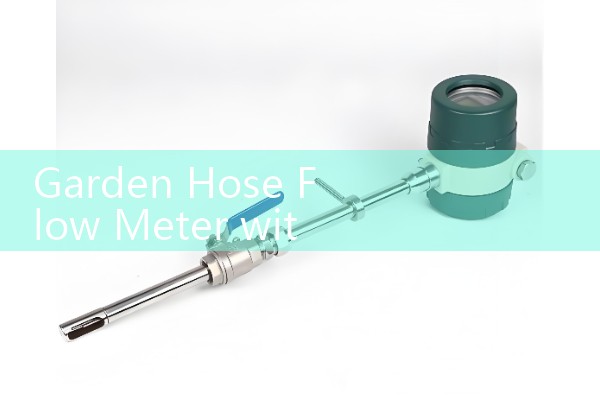
Our engineers configure the meter for you at the factory. You tell us your pipe size, water quality, and flow range. We set the K factor and the pulse output scaling. Plug and play. Because garden irrigation is often seasonal, we recommend removing the meter in freezing weather if you are in a region like northern China or inland Australia. The battery pack should be stored at room temperature.
Technical Specs You Will Actually Use
Here are the numbers we share with customers when they ask about a smart backyard flow meter setup.
Pipe diameters: DN15 and DN20 standard, other sizes on request.
Flow range: 0.5 to 30 L/min for DN15 mag meter, 2 to 60 L/min for DN20 turbine.
Output: pulse (open collector) or 4-20 mA active. Optional RS485 Modbus RTU.
Power: 3.6 V lithium battery or 12-24 V DC loop powered. Battery life up to 18 months with one pulse per liter.
Valve: 12 V DC normally closed solenoid valve, 1/2 inch or 3/4 inch BSP thread, rated up to 8 bar.
Controller: simple preset counter with LCD, triggers a latching or momentary close signal. No extra programming needed.
These components are in stock in our Nanjing warehouse and ship to Oceania, Southeast Asia, Middle East, and Africa. Average delivery to Sydney or Auckland is 5 to 7 working days via DHL or FedEx.
Frequently Asked Questions
Q: Can a garden hose flow meter with automatic shut off work with low pressure gravity fed water?
A: Yes, our electromagnetic meter works down to 0.2 bar inlet pressure. The meter itself adds almost no pressure loss. The solenoid valve needs a minimum differential pressure of 0.3 bar to open and close reliably. For very low head systems, we recommend a motorized ball valve instead.
Q: Is the smart valve safe for potable water used in vegetable gardens?
A: The wetted parts are PPS and 316L stainless steel for the mag meter, and nylon with ceramic bearings for the turbine. All materials comply with food contact requirements. There is no lead or brass in contact with water.
Q: How do I power the meter and valve if there is no outdoor electricity?
A: Use the battery powered option. A 3.6 V D size lithium cell powers the electronics. For the solenoid valve, a small 12 V 7 Ah sealed lead acid battery with a solar trickle charger works for an entire dry season. We can supply a ready to install solar panel and charge controller kit.
Q: What is the accuracy at very low flow, like a slow drip irrigation line?
A: For the electromagnetic DN15 meter, accuracy is plus minus 1.5 percent of reading above 1 L/min. Below 1 L/min, the error can increase to plus minus 3 percent. A turbine meter is not recommended below 2 L/min due to bearing friction. We suggest grouping drip lines to stay in the optimum range.
Q: Can I integrate your flow meter with my existing smart home or farm controller?
A: Yes. The pulse output connects directly to any digital input that counts dry contact pulses. For Modbus RTU, we provide the register map. Common software like Home Assistant or Node RED can read the flow total and trigger automations. We also have a free Windows configuration tool for initial setup.
Send us your pressure (bar), pipe size (DN), water quality, and target flow range (L/min) for a complete smart backyard valve quotation. Email [email protected] or call +86-135-1213-1526. You can also reach us on WhatsApp at 86-135-12131526 or WeChat: +86 13512131526. Our team will reply with a detailed offer and technical datasheet within one business day.
 Hot Product
 Related AD