

『Keyence Flow Meter Fd X Manual: Sizing and Troubleshooting Micro-Flow Thermal Displacement Systems for Glues』Related information(clamp on meter|electromagnetic meter|venturi meterrotameter|orifice meter|ultrasonic flow meter|mass flow meter|coriolis mass flow meter|coriolis flow meter|magnetic flow meter|magmeter flow meter|magflow flow meter|mag meter flow meter|electromagnetic flow meter|vortex flow meter|turbine flow meter|thermal mass flow meter|thermal flow meter|rotameter flow meter)
Keyence Flow Meter FD-X Manual: Sizing and Troubleshooting Micro-Flow Thermal Displacement Systems for Glues
Quick Answer for Engineers
Quick answer: a thermal displacement flow meter on a glue line only gives stable readings when the tube OD, tube material, wall thickness, glue viscosity, and temperature are all fixed before calibration. Most field problems on Keyence FD-X type clamp-on sensors come from air bubbles, short straight runs, or temperature drift on the tube wall. If you need mass flow data for a glue dispense loop, Silver Automation Instruments can quote a micro Coriolis meter with 4 to 20 mA HART output for your actual tube size and flow range.
This page gives you practical sizing rules and troubleshooting steps for micro-flow thermal displacement systems on glues. We have seen these failures on customer sites in Vietnam, Thailand, Malaysia, and the Philippines. The details below come from field service calls, not from a lab brochure.
What the Keyence FD-X Manual Covers
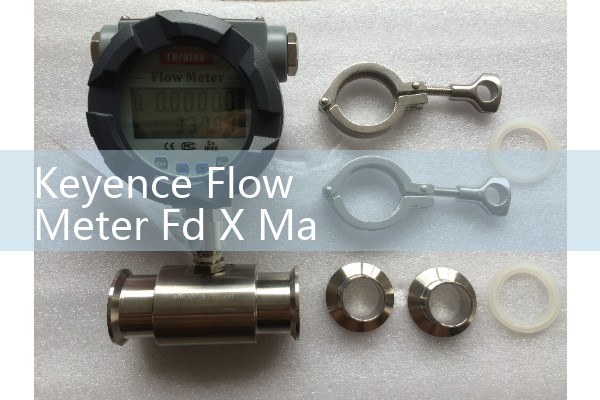
The Keyence FD-X manual describes a clamp-on thermal displacement sensor for small tubes. The sensor compares temperature at two points along the tube. Liquid movement changes the temperature profile. The transmitter converts that change into a flow signal. For glue, common tube sizes are 3 mm, 4 mm, 6 mm, and 1/8 inch OD. The manual gives basic wiring and setting steps. It does not solve every adhesive application because glue is not water.
Most engineers skip the section about tube material. That is a mistake. Nylon, PTFE, polyurethane, and stainless steel have different thermal conductivity. A sensor set up on a 4 mm nylon tube will not read the same on a 4 mm PTFE tube. You must calibrate on the actual tube and with the actual glue at working temperature.
Sizing Rules for Glue Micro-Flow Lines
First confirm the flow range. For low-viscosity adhesives like cyanoacrylate, you may need 0.1 to 20 mL/min. For paste adhesives, the range may be 1 to 50 mL/min. Write down the minimum flow you must detect, not the average. A sensor that works at 10 mL/min often misses a 0.5 mL/min leak or drip.
Second confirm the tube OD and wall thickness. A clamp-on thermal displacement sensor needs good contact with the tube wall. For tube OD below 3 mm, alignment is difficult. For wall thickness above 1.0 mm, response slows down. Use the shortest sensor mount section and keep the tube straight for at least 10 to 20 times the tube OD before the sensor.
Third confirm glue viscosity at operating temperature. Most dispense glues run between 20 cP and 2000 cP. Above 5000 cP, the thermal displacement signal becomes slow and may not follow fast dispense cycles. If your glue thickens in a cold shop, install line heating or move the sensor closer to the dispense valve.
Fourth confirm backpressure and bubble control. A small backpressure valve at 0.5 to 1.0 bar helps keep dissolved air out of the glue. Air bubbles pass the sensor as false flow pulses. If the glue tank is open, a vacuum de-gas step may be needed before the pump.
Troubleshooting Unstable Readings on Glue Lines
Here is the thing: most unstable readings on a glue line have a mechanical cause, not an electronic cause. Check the tube clamp first. A gap of 0.2 mm between the sensor and the tube can create a zero offset. Re-align the sensor and clean the tube surface with isopropyl alcohol.
If the flow reading drifts while the pump speed stays the same, look for micro air bubbles. Bubbles often collect at fittings, filters, or the inlet of the dispense valve. Tighten all fittings and check the pump seal. A small leak that allows air in will not always sh
If the sensor reports zero flow while the pump is running, check the tube for full liquid. A partially filled tube or an empty line will not produce a stable thermal signal. Then check the tube wall. If the wall is too thick or the tube material changed from nylon to PTFE, the sensor may not see the low flow. Re-calibrate on the new tube material.
If the reading is noisy, check for mechanical vibration from the pump or a nearby solenoid valve. Tie down the tube on both sides of the sensor. Leave no tube span that can shake. Electrical noise from a variable frequency drive can also enter the signal cable. Separate the sensor cable from motor cables by at least 200 mm.
If you see reverse flow spikes, the cause is usually a valve closing fast or a nozzle suck-back. A fast shutoff creates a pressure wave. The sensor sees the wave as reverse flow. Slow the valve closing time by 50 to 100 ms or add a small pulse damper.
When a Wetted Meter Works Better
Clamp-on thermal displacement meters are convenient because they do not touch the glue. But they depend on tube material, wall thickness, couplant, and temperature. For critical dispense weight, a wetted meter gives direct mass flow. Silver Automation Instruments supplies micro Coriolis mass flow meters for adhesive lines from 0.05 kg/h to 30 kg/h. The wetted parts are 316L stainless steel. Output is 4 to 20 mA HART, pulse, or RS485. Accuracy is 0.2 % of rate. Pressure rating can be 100 bar.
Last year a paint manufacturer in Vietnam asked us for a replacement on a 6 mm polyurethane glue line. The glue was polyurethane at 1200 cP and 30 °C. Their clamp-on meter lost signal every time the shop temperature dropped below 22 °C. We supplied a micro Coriolis meter with DN4 connections. They got stable batch records after one shift. The meter measured mass directly, so the viscosity change did not matter.
For solvent-free adhesives, a thermal mass flow meter can also work. For solvent-based glue, use a Coriolis meter because the thermal signal shifts with solvent concentration. Send us your glue type, viscosity in cP, flow range in mL/min, tube OD in mm, and temperature in °C. We will reply with a model, a price, and a delivery date.
FAQ: Micro-Flow Thermal Displacement Systems for Glues
Can the Keyence FD-X work with all glue types? No. It works best with single-part adhesives that have stable viscosity. Filled epoxies and solvent-borne glues can coat the tube wall and slow the thermal response.
Why does my flow sensor read zero while the pump is on? The usual causes are an empty tube, a clamp gap, a tube wall that is too thick, or a sensor that was calibrated on a different tube material.
How do I size a micro-flow meter for a glue line? Give the tube OD, tube material, flow range in mL/min, viscosity in cP, and temperature. Match the sensor range to the minimum flow you need to detect, not the average flow.
Is a wetted meter better than a clamp-on meter for glues? For critical dispense weight, yes. A micro Coriolis meter measures mass directly. It does not depend on tube wall thickness or material. It does require flushing after the shift.
Can Silver Automation Instruments replace a Keyence FD-X sensor? Yes. We offer thermal mass and micro Coriolis meters for adhesive, solvent, and reagent lines. Tell us your tube OD, flow range, viscosity, and pressure. We will send a quote with lead time.
Contact Silver Automation Instruments
Tel: +86-25-68650347
WhatsApp: +86-25-52155837
WeChat: +86 15365082610
 Hot News
 Related AD