

 Current position > Product detail
『Isco Area Velocity Flow Meter Selection: Matching Stream Profiles with Combined Level and Velocity Sensors』Related information(clamp on meter|electromagnetic meter|venturi meterrotameter|orifice meter|ultrasonic flow meter|mass flow meter|coriolis mass flow meter|coriolis flow meter|magnetic flow meter|magmeter flow meter|magflow flow meter|mag meter flow meter|electromagnetic flow meter|vortex flow meter|turbine flow meter|thermal mass flow meter|thermal flow meter|rotameter flow meter)
Isco Area Velocity Flow Meter Selection: Matching Stream Profiles with Combined Level and Velocity Sensors
Quick Answer: Choose an area velocity flow meter based on the stream profile first. A combined level and velocity sensor gives a direct flow rate in open channels where the cross section changes with depth. If you still use an Isco area velocity flow meter and need a spare or a lower cost alternative, send us your channel shape, velocity range, and output signal.
What Stream Profile Data You Need Before Selection
You need four data points before you pick a sensor. Channel shape, maximum level, minimum velocity, and the presence of silt or debris. A rectangular flume and a round culvert behave in different ways. The level sensor measures water depth. The velocity sensor measures flow speed. The flow meter internal firmware computes flow rate from the measured area and the measured velocity.
In practice, most engineers skip the velocity profile check. They see a flume and assume a level only calculation will work. That works for a clean Parshall flume. It does not work well in a surcharged pipe or a channel with heavy sedimentation. We have seen this drift on customer sites in Vietnam and the Philippines. The level reading looks fine but the velocity sensor drifts because the stream profile is uneven.
Why Combined Level and Velocity Sensors Win in Variable Conditions
A combined level and velocity sensor uses two measuring elements in one body. The level element can be a pressure cell or an ultrasonic transducer. The velocity element can be a Doppler ultrasonic sensor. The device measures level and velocity at the same time. Then it calculates flow using the channel geometry stored in the transmitter.
This method handles changing flow depths better than a level only formula. For example, a wastewater channel with a 1.2 m maximum depth and velocities from 0.05 m/s to 2.5 m/s needs a combined sensor. A level only system assumes a fixed relationship between level and velocity. That assumption breaks when the pipe backs up or when rain enters the sewer.
Silver Instruments has supplied similar open channel flow meters to water utilities in Peru and Malaysia. The customers often ask for Modbus RTU output, battery power, and an IP68 sensor body. We supply those options without changing the core sensor design.
Isco Area Velocity Flow Meter Selection Criteria
If you currently specify an Isco area velocity flow meter, check the sensor compatibility with your existing logger. Isco sensors usually output a proprietary signal to an Isco sampler or flow meter. A third party sensor may need a signal converter. Silver Instruments offers 4-20 mA, pulse, and Modbus outputs. You can connect these to a SCADA system or a controller without a special converter.
Key selection points include velocity range, level range, and cable length. A typical area velocity sensor measures velocity from 0.03 m/s to 6.1 m/s. Level range can be 0.15 m to 10 m depending on the sensor model. Cable length matters for long runs from a manhole to a panel. We stock cable lengths from 10 m to 50 m. Longer cables need a custom quote.
Temperature and hazardous area rating also decide the part number. For a wastewater lift station in the Middle East, you may need an ATEX Zone 1 rated sensor. For a clean water canal in Australia, a standard IP68 sensor is enough. Tell us your zone classification and we will match the correct housing.
Installation and Mounting Factors
Most area velocity sensors mount on a stainless steel ring or a spring band inside the pipe. The sensor sits at the
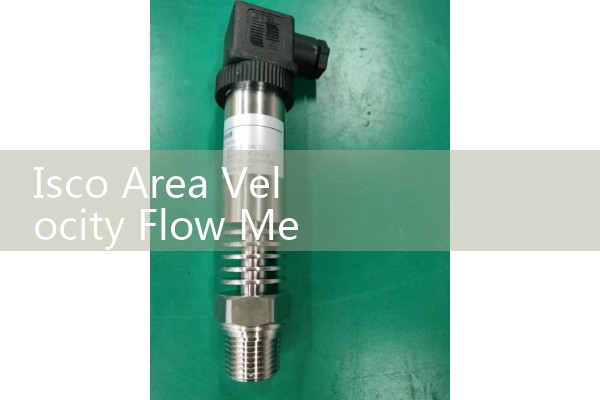
Do not mount the sensor in a dead zone. A dead zone is a spot behind a gate or a sharp bend where the water recirculates. The velocity reading will be unstable. Move the sensor at least five channel widths downstream from any gate, weir, or bend. For a 0.6 m wide channel, that means 3 m downstream.
We have seen a paint manufacturer in Indonesia install a sensor right after a 90 degree bend. The flow reading swung from 40 m3/h to 120 m3/h with no process change. They moved the sensor 8 m downstream and the reading stabilized within 2 percent.
Silver Instruments Cross Reference and Replacement
Silver Automation Instruments is a flow meter manufacturer in Nanjing, China. We supply industrial flow meters and process instruments to users in Southeast Asia, Oceania, Latin America, Africa, and the Middle East. Our main products include electromagnetic flow meters, ultrasonic flow meters, Coriolis mass flow meters, vortex flow meters, oval gear flow meters, thermal mass flow meters, pressure transmitters, and paperless recorders.
If you need an Isco area velocity flow meter replacement, send us the existing part number or the sensor specifications. We will cross reference the level range, velocity range, and output signal. Then we will propose a Silver Instruments sensor or a compatible third party option. This saves time when the original sensor is out of stock or the lead time is too long.
A typical replacement query we receive sounds like this. The customer has a 12 inch corrugated metal pipe with a 0 to 3 m level range and a 0.05 to 3 m/s velocity range. The output must be 4-20 mA HART. The power supply is 24 V DC. We quote from our open channel flow meter range and include a mounting kit.
FAQ
Can I use an area velocity flow meter in a partially full pipe? Yes, this is the main application. Install the sensor near the bottom of the pipe. The device measures level and velocity and calculates flow using pipe diameter and roughness.
What is the minimum velocity an area velocity sensor can detect? Most Doppler velocity sensors detect from 0.03 m/s. Below that the reading may be noisy. In clean water with no particles, a Doppler sensor may not work. Use a transit time ultrasonic flow meter or an electromagnetic flow meter instead.
Does Silver Instruments supply an exact Isco area velocity flow meter equivalent? We do not claim an exact Isco equivalent. We offer compatible sensors with standard outputs and similar measuring ranges. You need to verify the connector and output signal against your logger.
What output signals are available on your open channel flow meters? Standard options include 4-20 mA, pulse, RS485 Modbus RTU, and HART. Battery powered options are available for remote sites.
How do I get a price for an area velocity flow meter? Send us your channel shape, channel width, maximum level, minimum and maximum velocity, output signal, and power supply. Contact us by Tel: +86-25-68650347. We usually reply within 12 hours.
Send your flow range, channel dimensions, and output requirement to us. Our engineers will recommend a sensor with the correct mounting method and cable length. Contact Silver Automation Instruments by Tel: +86-25-68650347, WhatsApp: +86-25-52155837, or WeChat: +86 15365082610. We support English, Spanish, and Arabic queries.