

 Current position > Product detail
『Refrigerant Flow Meter 40 Bar: Fluid Integrity Rules for Next-Gen HFO Blends』Related information(clamp on meter|electromagnetic meter|venturi meterrotameter|orifice meter|ultrasonic flow meter|mass flow meter|coriolis mass flow meter|coriolis flow meter|magnetic flow meter|magmeter flow meter|magflow flow meter|mag meter flow meter|electromagnetic flow meter|vortex flow meter|turbine flow meter|thermal mass flow meter|thermal flow meter|rotameter flow meter)
Refrigerant Flow Meter 40 Bar: Fluid Integrity Rules for Next-Gen HFO Blends
Quick Answer: Next-gen HFO refrigerant blends shift density and viscosity constantly. A 40 bar rated Coriolis mass flow meter measures mass directly. It does not care about fluid property changes. Silver Instruments supplies meters that maintain fluid purity and deliver repeatable ±0.2% accuracy at every charge.
HFO Blends Break Traditional Flow Meter Rules
Most engineers know R-134a behaved predictably. R-1234yf, R-454B, and R-513A do not. These low-GWP HFO mixtures have temperature glide, wide viscosity swings, and density shifts from 2.5 bar to 40 bar operating pressure. A turbine meter or vortex meter calibrated for one condition drifts when the blend composition changes. Silver Instruments has seen this at a chiller plant in Malaysia. Their R-514A charge line showed a 4% deviation between morning and afternoon runs. The root cause was fluid density change, not the meter hardware.
Coriolis meters eliminate that variable. They measure mass flow rate and density directly from the vibrating tube. Because the measurement principle is independent of fluid properties, the meter stays accurate even when the blend transitions from liquid to supercritical phases.
Why You Need a 40 Bar Flow Meter Rating
Refrigerant charging stations and recovery units often push past 35 bar on hot days. A meter rated only for 25 bar will trigger safety shutdowns or burst disc failures. Silver Instruments rates its inline Coriolis sensor to 40 bar at 150°C. The wetted parts use 316L stainless steel with FFKM or EPDM O-ring seals, tested for R-1234yf and R-454C. Every meter gets a hydrostatic proof test at 1.5× rated pressure before shipping. One customer in Brazil verified this: their mobile charging cart hits 38 bar in direct sun. The 40 bar meter never tripped.
Pressure rating is not just a number. It is about fluid integrity. A leak or seal swell contaminates the whole refrigerant batch. With HFO blends costing USD 80–120 per kg, a bad seal wastes thousands of dollars and forces a system flush.
Fluid Integrity Rules We Follow
Here is the thing: refrigerant purity is the real profit driver. Silver Instruments enforces six fluid integrity rules on every meter shipped for HFO service.
1. No elastomer that swells more than 5% after 72-hour soak in R-1234yf at 60°C.
2. Double-block welded process connections to eliminate threads in the flow path.
3. Surface roughness Ra ≤ 0.8 µm on wetted tubes to prevent particle adhesion.
4. Factory helium leak test to 1×10⁻⁹ mbar·L/s.
5. Vacuum dried to -60°C dew point before fill port sealing.
6. Individual serialized material certificate for each meter, traceable to DIN EN 10204 3.1.
Most engineers skip the vacuum drying step. We do not. Moisture ingress into a closed refrigeration loop creates acid and slugs. Our meters ship with a dry nitrogen blanket inside. When you connect the meter, you do not introduce air.
Real Installations, Real Feedback
A cold storage operator in South Africa now uses two
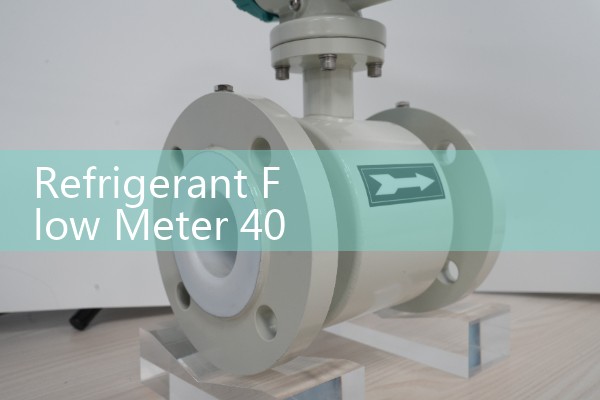
In Australia, an HVAC distributor retrofitted their filling station with a DN15 Coriolis meter with integral PT100. Now they batch fill R-32 and R-454B in the same line. They flush the meter with dry nitrogen between blends. Because the meter measures density, they can verify the correct refrigerant grade automatically. No more cross-contamination scares.
Silver Instruments Meter Technical Snapshot
This is the meter we recommend for 40 bar refrigerant service.
Pressure rating: 40 bar (580 psi) at 150°C.
Temperature range: -50°C to 150°C.
Line sizes: DN10, DN15, DN20.
Flow range: 0.2 to 600 kg/h (larger on request).
Accuracy: ±0.2% of rate for mass flow, ±0.0005 g/cm³ for density.
Outputs: 4-20 mA HART, Modbus RTU, pulse.
Materials: 316L stainless steel, optional Hastelloy C-22 for aggressive blends.
Approvals: Ex ia IIC T6 Ga, ATEX Zone 1 optional.
We ship with a calibration certificate matched to your HFO blend composition. You tell us the mass fractions of R-1234yf and R-134a, and we tune the factory calibration. This cuts site commissioning time to a few hours.
FAQ
Can your Coriolis meter handle two-phase flow during start-up?
Yes. The meter can tolerate short gas slugs of up to 10% void fraction without losing measurement. The transmitter detects bubble events and holds the last valid reading for up to 30 seconds.
What seals do you use for R-1234yf and POE oil?
Standard O-rings are FFKM (Kalrez grade). For lower-cost options we offer HNBR with a temp limit of 100°C. Specify your oil type when ordering.
Do you supply meters with dry-break quick connectors?
We can integrate Parker or Stucchi dry break couplings directly on the meter body. This reduces refrigerant release to less than 0.1 mL per disconnect.
How often should we recalibrate the meter?
Silver Instruments recommends a 24-month verification cycle. Under normal HFO service with no particle buildup, the zero point drift stays below 0.02% per year. In-house we can do a remote health check if you send us the Modbus data log.
What is the delivery time for a 40 bar HFO meter?
Standard DN15 meters ship in 2 weeks. Custom connections or ATEX certification add 4 weeks. Air freight to São Paulo, Bangkok, or Dubai takes 4–6 business days.
Send us your operating pressure (bar), temperature (°C), pipe size (DN), and required flow range. We will recommend the right Coriolis meter and share a test report against your HFO blend. Email: [email protected] | Tel: +86-25-68650347 | WhatsApp: +86-25-52155837 | WeChat: +86 15365082610.