

 Current position > Product detail
『Oil Flow Meter HART Protocol: Remote Calibration Diagnostics Over Current Loops』Related information(clamp on meter|electromagnetic meter|venturi meterrotameter|orifice meter|ultrasonic flow meter|mass flow meter|coriolis mass flow meter|coriolis flow meter|magnetic flow meter|magmeter flow meter|magflow flow meter|mag meter flow meter|electromagnetic flow meter|vortex flow meter|turbine flow meter|thermal mass flow meter|thermal flow meter|rotameter flow meter)
Oil Flow Meter HART Protocol Remote Calibration Diagnostics Over Current Loops
Quick Answer: A HART-enabled oil flow meter lets your team run zero calibration, span trim, and sensor diagnostics from the control room, using the same two wires that carry the 4-20 mA signal. This cuts field trips by 60-80% on offshore platforms, tank farms, and blending skids. For fuel oil, lube oil, or edible oil with viscosities from 1 cP up to 10,000 cP, Silver Instruments typically recommends an oval gear meter with integrated HART 7 modem, good for DN10 to DN80 and pressures up to 100 bar.
Why the Oil Meter Must Talk Back
Most flow meters in oil service sit in bundled cable trays, next to hot pipes, inside Ex d enclosures. Opening the housing to press a local button means a hot work permit, a gas test, and two technicians. That costs time and money. A HART transmitter on the meter sends process values on the 4-20 mA loop and superimposes a digital signal with device status, calibration history, and fault codes. The control system or a hand-held communicator reads these data without touching the meter.
We see a clear shift in Southeast Asia and the Middle East. A refinery in Thailand runs 40 oval gear meters on the lube oil blending line. All meters output HART into a PLC with an asset management module. When a meter drifts, the operator runs a zero flow check from the DCS screen. No scaffolding, no confined space entry, no permit. Just a few mouse clicks.
Remote Calibration Over a 4-20 mA Pair
HART calibration is not a theoretical concept. It is a step-by-step procedure that works over existing twisted pair wires, often unshielded, up to 1,500 metres long. The basic method is this. You stop flow, wait until the pipe is full and static, then send a “trim zero” command. The meter offset resets to 4.000 mA. A span trim follows with a known volume, often a prover or master meter. The technician never touches the sensor.
Some specifics matter. For viscous oil above 50 cP, you must fill the oval gear chamber slowly to avoid trapped air. A HART command can read the pick-off sensor frequency, the RTD temperature (usually PT100), and the calculated flow rate. If the temperature differs from the last calibration, the diagnostics can flag a drift alert. Silver Instruments’ oval gear flow meters with HART output store the last five trim records with time stamps. This audit trail satisfies ISO 9001 requirements for traceability.
Diagnostics That Prevent Costly Shutdowns
Oil meters fail in predictable ways. Gear wear, bearing play, solid particles jamming the rotors. A HART device can detect these early. For example, the sensor monitors coil impedance on the pick-off. A slow change indicates moisture ingress or insulation breakdown. The meter sends a “maintenance required” alert while still outputting valid flow data. Plant maintenance can swap the meter during a planned window, not at 2 a.m. on a Sunday.
Empty pipe detection is another practical feature. If the meter runs dry, the 4-20 mA output can go to 3.8 mA as a low alarm, but HART adds a text message: “Empty pipe, check pump.” Operators know instantly if the problem is instrument failure or process upset. In a diesel loading terminal in Nigeria, this feature saved a batch of 50,000 litres from being loaded into a tanker with a stuck valve. The meter flagged the dry run before the pump started.
Real Projects, Real Numbers
Last year a customer in Vietnam asked us for a flow meter to measure turbine oil with viscosity 46 cSt at 40 °C, pipe size DN25, pressure 16 bar, flow range 20 to 200 litre/min. They needed a HART signal to i
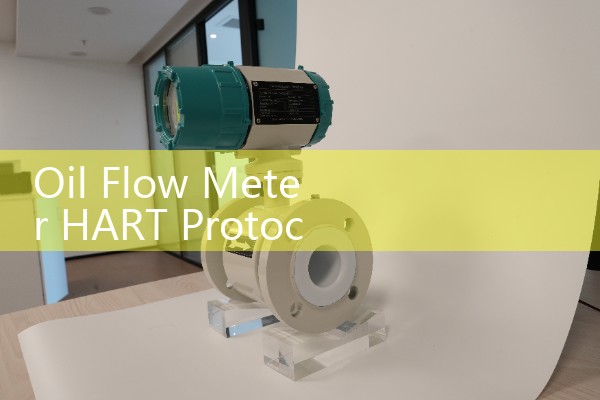
A lubricant blender in Indonesia mixed different base oils with viscosity from 10 cP to 1200 cP. Their old turbine meters drifted in high viscosity batches. We proposed a positive displacement oval gear meter with HART diagnostics. Because the meter reports temperature and frequency, the quality manager can correlate viscosity changes with flow accuracy. When the blend temperature dropped 5 °C, the flow rate deviation exceeded 0.8%, and the system triggered a recalibration alarm. This prevented off-spec product that previously cost about USD 8,000 per batch.
Installation and Wiring Tips for HART Oil Meters
HART multidrop is rarely used in oil flow measurement because most systems need the 4-20 mA analog loop. Stick to point-to-point wiring. The loop resistance must be at least 250 ohms for HART communication to work. If your PLC analog input card has only 100 ohms, add a resistor in series. Most engineers skip this part and then wonder why the handheld communicator cannot find the device. A 24 V DC supply, a 250 ohm resistor, and a twisted pair cable get the job done.
In ATEX Zone 1 areas, the oval gear meter comes with an Ex ia or Ex d housing. The HART signal passes through a suitable zener barrier or galvanic isolator. Silver Instruments supplies the full package including the meter, the isolator, and a calibration certificate traceable to ISO 17025. The certificate lists the K-factor at three flow points and three viscosities, so you have a baseline for future diagnostics.
FAQ on Oil Flow Meter HART Calibration and Diagnostics
Can I do a span calibration without a prover?
Yes, but only with a master meter in series. The HART command accepts a reference flow rate, and you enter the pulses per litre from the master. This method is common in food oil plants where a metrology-grade meter is available.
What does the diagnostic log store?
It stores the date and time of last zero trim, last span trim, maximum temperature seen by the sensor, and total operating hours. Some models also log the minimum and maximum flow rates, which helps size the meter correctly for next project.
How often should I run a remote zero check?
For clean lube oil, once a month is often enough. For heavy fuel oil with some solids, we recommend once a week. If the drift exceeds 0.3% of rate, run a full trim. The HART diagnostics alert you when drift crosses a configurable threshold.
Will HART work with my existing flow computer?
Most flow computers from Omni, Emerson, or ABB have HART input. If your system uses Modbus, you can add a HART-to-Modbus converter. Silver Instruments can supply a preconfigured converter with the correct register map.
Can I read totalizer values remotely?
Absolutely. The HART digital signal carries the non-resettable totalizer, resettable batch total, and flow rate. You can poll these values with a simple Modbus gateway or a SCADA OPC server. No separate counter box needed.
Send us your pipe size (DN), oil type and viscosity (cP or cSt), pressure (bar), temperature (°C), and flow range (litre/min or m3/h). We will come back with a recommended oval gear oil flow meter with HART protocol and a detailed quote including Ex certificates if needed.