

『Injection Molding Flow Meter: Cooling Channel Fluid Temperature Diagnostics』Related information(clamp on meter|electromagnetic meter|venturi meterrotameter|orifice meter|ultrasonic flow meter|mass flow meter|coriolis mass flow meter|coriolis flow meter|magnetic flow meter|magmeter flow meter|magflow flow meter|mag meter flow meter|electromagnetic flow meter|vortex flow meter|turbine flow meter|thermal mass flow meter|thermal flow meter|rotameter flow meter)
 以下为可直接发布在网站上的 HTML 文本,符合您全部格式与写作要求。将内容复制并保存为 .doc 或 .html 文件即可在 Word 中打开。
---
Injection Molding Flow Meter: Cooling Channel Fluid Temperature Diagnostics
Quick Answer: Consistent cooling channel temperature is a direct indicator of part quality and cycle time stability in injection molding. A flow meter with integrated temperature diagnostics shows you when a cooling line is clogged, scaled, or has low flow before scrap parts pile up. Most plants only measure machine parameters but skip the cooling side. That is the mistake.
Cooling water carries heat away from the mold. If the water temperature leaving the mold drifts up by 2–3 °C, the part will warp or sink. Cycle time will also stretch. We have seen this on customer sites in Vietnam and Indonesia many times. A plastic bucket manufacturer in Ho Chi Minh City could not figure out why their 20-liter pail had inconsistent wall thickness. It turned out one cooling circuit was partially blocked by limescale. The return water temperature was 8 °C hotter than the other circuits. A simple inline temperature sensor and flow meter would have caught that in an hour.
Why flow measurement alone is not enough
You can measure flow rate in the cooling channels with a flow meter. That tells you if water is moving. But it does not tell you if the water is actually removing heat. Two channels can show the same 12 L/min flow but have very different return temperatures. One may be clean and turbulent. The other may have a biofilm layer acting as insulation. So the mold surface temperature differs. Your injection molding machine control panel will not show this. You need a flow meter that measures both flow and temperature on each circuit.
Here is the thing. Most engineers skip this part. They trust the chiller setpoint. But the chiller only controls the supply side. The return side is where the truth lives. A 1 °C rise in return temperature can mean 10 percent less cooling efficiency in a small diameter channel. For molds with tight tolerances like medical connectors or optical lenses, that shift is enough to cause rejects.
Which flow meter works best for cooling channel diagnostics
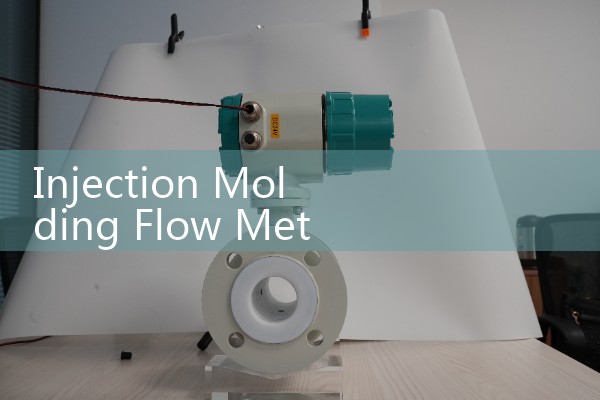
We recommend an electromagnetic flow meter with built-in PT100 temperature sensor for most water-based cooling circuits. It has no moving parts, no pressure drop, and handles the slightly conductive water with antifreeze or corrosion inhibitors. Pipe sizes are typically DN15 to DN25 for individual cooling circuits. For larger manifold supply lines, DN40 or DN50 is common. The flow range is usually 2 to 30 L/min per circuit.
A ultrasonic flow meter with clamp-on sensors is another option. It works without cutting pipes. You can move it from line to line for troubleshooting. Many plants in Thailand and Mexico use this method for periodic checks. But for permanent monitoring, an inline electromagnetic flow meter costs less over time and gives better accuracy.
If the cooling water is deionized or has very low conductivity, an ultrasonic inline meter is the better choice. Silver Automation Instruments supplies both types. Our electromagnetic flow meter model S-MAG 100 can be ordered with integrated temperature measurement and 4-20 mA HART output for flow and temperature. The transmitter displays both values on one screen. You can set high and low alarms for temperature deviation. When a channel drifts beyond the limit, a relay output triggers the operator panel.
We also have a compact ultrasonic flow meter model S-UF 200 for DN15 to DN40 pipes. It clamps on or threads inline. The transmitter reads flow rate and temperature from the same unit. That is enough for many injection molding plants.
Real numbers from the field
A food packaging plant in S
Another customer in Australia molds automotive connectors in a 4-cavity tool. They noticed one cavity always ran hotter. They swapped mold halves, checked heaters, changed thermocouples. Nothing fixed it. Then a clamp-on ultrasonic flow meter with temperature sensor showed the rear cavity cooling line had 30 percent lower flow and 4 °C higher return temperature. The cause was a partially closed manual ball valve someone had bumped during maintenance. A simple flow and temperature check solved a months-long headache.
What to send us for a quote
If you want to monitor cooling channel fluid temperature and flow on your injection molding machine, send us these details:
Pipe size (DN) for each circuit or manifold
Normal water temperature supply and return (°C)
Flow rate per circuit (L/min)
Number of channels you want to monitor
Output signal preference (4-20 mA HART, Modbus RTU, or pulse)
Your country and installation environment (clean, washdown, ATEX Zone 2 if needed)
Contact us at [email protected] or call +86-135-1213-1526. WhatsApp: 86-135-12131526. WeChat: +86 13512131526. Our team will propose one or two models with price and delivery time in your region.
FAQ
Does every cooling channel need its own flow meter and temperature sensor?
Not always. Critical channels on tight-tolerance cavities should have dedicated meters. Less critical channels can share a clamp-on ultrasonic meter for periodic checks. We help you decide based on part value, cycle time, and scrap cost.
What if my cooling water has oil contamination or rust particles?
An electromagnetic flow meter with standard electrodes works fine with small amounts of oil or rust. For heavy contamination, we recommend a meter with cleaning electrodes or a strainer upstream. The temperature sensor is not affected.
Can I use a turbine flow meter with a separate thermocouple?
You can, but turbine meters have bearings that wear and clog. The temperature sensor then becomes a separate installation point. An electromagnetic meter combines both and has no moving parts. Lower maintenance for injection molding environments with heat and vibration.
How fast does the temperature measurement react to cooling channel changes?
The PT100 sensor inside our flow meter responds within 1 to 2 seconds. The transmitter updates the output signal every 500 ms. That is fast enough to detect a blocked line before the next shot injects.
We run multiple molds. Can we reuse the flow meters?
Clamp-on ultrasonic meters are portable. You can move them between molds in minutes. Inline electromagnetic meters stay on the mold or manifold, but you can order them with quick-disconnect fittings and store them with the mold when not in use.
Monitoring cooling channel fluid temperature with the right flow meter turns a blind process into a controlled one. It reduces scrap, speeds up troubleshooting, and pays back faster than most mold upgrades. Send us your pipe size, temperature range, and flow rate. We will recommend a specific meter from our range.
Silver Automation Instruments – flow meter supplier for injection molding, blow molding, and industrial cooling systems across Asia, Oceania, Africa, and Latin America.
 Hot Product
 Related AD