

『Oil Flow Meter 4-20mA: Wiring Long-Distance Analog Transmitters with Ease』Related information(clamp on meter|electromagnetic meter|venturi meterrotameter|orifice meter|ultrasonic flow meter|mass flow meter|coriolis mass flow meter|coriolis flow meter|magnetic flow meter|magmeter flow meter|magflow flow meter|mag meter flow meter|electromagnetic flow meter|vortex flow meter|turbine flow meter|thermal mass flow meter|thermal flow meter|rotameter flow meter)
Oil Flow Meter 4-20mA: Wiring Long-Distance Analog Transmitters with Ease
Quick Answer: Long cable runs from an oil flow meter do not degrade a 4-20 mA loop if you calculate total loop resistance and use a shielded twisted pair. Most Silver Instruments positive displacement flow meters can drive a signal 500 to 800 meters without an isolator when powered by 24 V DC. For a fuel depot in Thailand, we eliminated signal jumps simply by grounding the shield at the PLC panel end only.
Why 4-20 mA Stays Dominant in Oil Flow Measurement
A 4-20 mA analog signal is slow by digital standards but tough. It shrugs off the electromagnetic noise that VFDs and pump starters throw at it in an oil blending shed. A live-zero 4 mA means a broken wire reads 0 mA, so the control room instantly knows the diesel flow meter loop is open. This matters a lot when you batch light fuel oil into tanker trucks and a lost signal means an overfill risk.
Most customer specs we receive from Vietnam, Nigeria, and Peru still list a 4-20 mA with HART as the minimum requirement on a fuel oil flowmeter. Pulse is common for batching, but for totalized monitoring on a 300 m run from the jetty to the DCS, analog current wins. The loops are easy to troubleshoot with a cheap multimeter and do not need a trained fieldbus technician.
Calculating Loop Resistance and Cable Size for Long Runs
Here is the thing. The transmitter inside an oval gear oil flow meter behaves like a current regulator. It adjusts its internal voltage drop to keep the current precise. But it can only drop so much. A typical loop-powered flow meter gets 24 V DC from the panel. Subtract the minimum transmitter operating voltage (often 10 to 12 V for a Silver Instruments OGF series sensor) and the panel receiver resistor (250 ohm for HART, dropping 5 V at 20 mA). You have about 7 to 9 V left to burn in the cable loop.
Copper has resistance per meter. A pair of 1.0 mm2 wires has roughly 0.036 ohm per meter loop resistance. With 500 meters of cable, that loop adds 18 ohm. At 20 mA, the voltage drop is only 0.36 V. In practice, most engineers skip this exact math until the distance passes 600 meters. At 1,200 meters with 0.5 mm2 signal cable, the loop resistance can eat 4 V and the signal clips at high flow. For a heavy crude oil flow meter installed 1,500 m from the wellhead control panel, we specify 1.5 mm2 shielded twisted pair or add a loop isolator at the halfway junction box.
Wiring a Silver Instruments Positive Displacement Flow Meter
Our factory-stock oil flow meters with 4-20 mA output come in a 2-wire or 4-wire configuration. The OGF series oval gear meter for diesel, furnace oil, and lubricating oil uses a 2-wire 4-20 mA loop. Terminal 1 is 24 V DC plus, terminal 2 is signal return. A typical wiring diagram is printed inside the glass-reinforced nylon cover. Do not guess the polarity. Reverse connection on an older flow transmitter can blow the protection diode and zero the output for hours.
We ship a lot of OGF-A-SS meters with a remote display to sea ports in Mozambique. The flow meter body sits on a fuel pipeline DN25, and the indicator is 200 m away in the operator cabin. The twisted pair runs in a steel conduit separate from the 380 V pump cables. This is a hard rule. Parallel runs next to motor cables couple 50 Hz noise onto the loop. At the cabin end, the shield is connected directly to the instrumentation earth bar, and left floating at the sensor head. Floating both ends creates a ground loop that puts a nasty 1 to 2 mA oscillation on top of the flow signal.
A Fuel Terminal Upgrade in Angola
Last year a lubricant blending plant in Luanda requested 12 oil flow meters with 4-20 mA outputs. They needed to measure base oil transfers from storage tanks to mixing vessels. Pipe sizes were DN40 and DN50, flow rates from 20 to 180 L/min, viscosity up to 320 cSt. We s
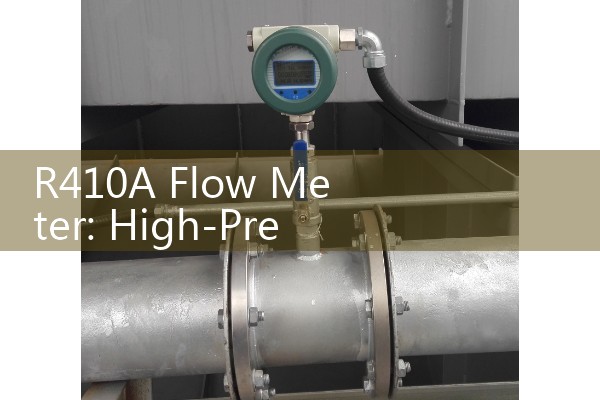
The site electrician used a multi-core cable with 0.75 mm2 conductors, which is fine for the resistance. But he landed the shield at both the junction box next to the tank and the PLC cabinet. The result was a slow 0.3 mA drift that followed the temperature of the cable tray in the afternoon. Our support technician told him to open the shield at the field junction box and only leave the panel-side ground connected. The drift disappeared in one hour. The total loop accuracy went back to plus or minus 0.5 percent of rate without any hardware change.
Common Mistakes That Ruin a Good Oil Flow Signal
Nine out of ten loop problems we see are not the flow meter itself. The usual suspects: unshielded cable running alongside 3-phase VFD motor leads, a 250 ohm HART resistor missing in the loop so the multimeter reads 1 to 5 V across an open circuit, or a transmitter with its minimum voltage rating ignored. We also see a lot of portable diesel flow meters brought into a permanent line and wired with a cheap phone charger 24 V supply that floats at 60 Hz ripple. A clean linear DC supply is a small investment that stops a 2 percent reading error.
Most engineers skip this part: check the analog input card configuration. A PLC input set to 0-20 mA will read a permanent 4 mA offset as 20 percent flow with an empty pipe. Always configure the channel for 4-20 mA and enable broken wire detection. On a Honeywell or Siemens PLC, this is a single tick box. It lets the DCS scream when the oil flow meter cable gets cut by a forklift.
FAQ: Five Direct Questions on 4-20 mA Oil Flow Meter Wiring
Can I use a 3-core unshielded cable to connect a diesel flow meter 300 meters away?
We strongly advise against it. An unshielded cable acts as an antenna. In a fueling station with radio sets and pump contactors, you will see random 0.1 to 0.5 mA jumps. Use a shielded twisted pair with at least 0.5 mm2 cross section and ground the shield at the control panel only.
What is the maximum distance for a 2-wire 4-20 mA oil flow meter without a repeater?
With a 24 V DC supply and 1.5 mm2 cable, 1,200 meters is practical for most Silver Instruments flow meters after you verify the total loop resistance is under the limit. For runs beyond 1,500 meters, we recommend a 4-wire active transmitter or inserting a loop isolator at the midpoint.
Do I need a HART modem just to read flow rate from an oil flow meter?
No. The primary 4-20 mA signal carries the flow rate directly. You can read it with a simple loop-powered indicator or a PLC analog input. HART is only necessary if you want to remotely access the flow totalizer, diagnostic registers, or change the range without climbing the tank.
Why does my 4-20 mA signal read steady in the morning but drift 1.5 percent by noon?
It is almost always a ground loop caused by the shield tied to different earth potentials at both ends. The thermal expansion of the cable tray changes the resistance path slightly. Disconnect the field-end shield. That fixes the drift 19 out of 20 times.
Can Silver Instruments supply an oil flow meter with both 4-20 mA and pulse output?
Yes. Most of our OGF oval gear meters can be configured with a dual output: a 4-20 mA loop for the DCS and an open collector pulse for a local flow totalizer or batching controller. Just specify your control system voltage and required pulse scaling when you order.
Send us your oil type, viscosity in cP, normal and maximum flow rate in L/min or m3/h, pipe diameter (DN), and maximum process temperature. We will return a recommended meter model with full wiring notes and a price. Contact Silver Automation Instruments through flow-meter.com.au.
 Hot News
 Related AD