

『Natural Refrigerant Flow Meter: Scaling Green Systems with Code-Compliant Sensors』Related information(clamp on meter|electromagnetic meter|venturi meterrotameter|orifice meter|ultrasonic flow meter|mass flow meter|coriolis mass flow meter|coriolis flow meter|magnetic flow meter|magmeter flow meter|magflow flow meter|mag meter flow meter|electromagnetic flow meter|vortex flow meter|turbine flow meter|thermal mass flow meter|thermal flow meter|rotameter flow meter)
Natural Refrigerant Flow Meter: Scaling Green Systems with Code-Compliant Sensors
Quick Answer
Natural refrigerants like ammonia (R717), CO2 (R744), and propane (R290) need flow meters that tolerate aggressive media, wide temperature swings, and hazardous zones. Silver Instruments provides Coriolis mass flow meters, electromagnetic flow meters, and vortex meters with ATEX, IECEx, and 4-20 mA HART outputs. These sensors sit inside industrial refrigeration, heat pumps, and chillers to keep energy efficiency high and refrigerant losses low.
We have seen ammonia refrigeration systems in Southeast Asia fail because a standard flow meter could not handle low viscosity and vapor slugs. A seafood processor in Vietnam replaced their turbine meter with a Silver Instruments Coriolis meter sized at DN25. The meter now tracks 320 kg/h of liquid ammonia at -12 °C and 14 bar. No moving parts, no drift. Inside the housing, all wetted parts are 316L stainless steel. The transmitter outputs 4-20 mA HART directly to the plant DCS.
CO2 transcritical systems run at pressures up to 120 bar. Standard flanged connections and thin-walled bodies are a risk here. Our vortex flow meter with an integrated PT100 temperature probe gives mass flow when paired with a pressure transmitter. A customer in the Philippines measures R744 flow at 90 bar and 2 °C for their cocoa cooling tunnel. They use a 4-20 mA HART signal to feed a PLC and log energy data every 10 seconds. The meter body is all-welded stainless steel, with no gaskets exposed to the fluid.
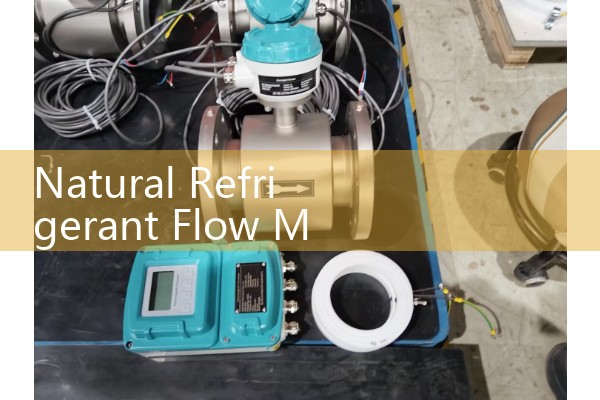
Electromagnetic flow meters handle conductive secondary fluids like chilled brine or glycol mixes. A dairy plant in Kenya uses a DN80 electromagnetic meter to monitor 30 percent propylene glycol flow at -5 °C. The liner is PTFE, electrodes are Hastelloy, and the housing meets IP68 for daily washdowns. In practice, most engineers skip this part: always check the minimum conductivity. Our electromagnetic meters need at least 5 µS/cm, which glycol-water mixes easily exceed.
Code compliance is not optional. Our Coriolis meters for ammonia ship with ATEX Zone 1 / II 2G Ex ia IIC T6 approval. For propane, we offer intrinsically safe Ex ia versions with stainless steel 316L wetted parts and no copper alloys. Every meter leaves the factory with a calibration certificate traceable to ISO 17025. The sensors survive -40 °C to +150 °C process temperatures, and the electronics can be remote-mounted outside the hazardous area.
Heres the thing about material compatibility: ammonia attacks copper, brass, and most elastomers. Silver In
Get a quote specific to your system. Send us your pressure (bar), temperature (C), pipe size (DN), and flow range. Email [email protected] or call us at +86-135-1213-1526. You can also reach us on WhatsApp: 86-135-12131526 or WeChat: +86 13512131526. Our engineers may recommend a Coriolis meter for liquid ammonia, a vortex meter for high-pressure CO2, or an electromagnetic meter for brine circuits. Include your refrigerant type and we will reply with a datasheet and price within 24 hours.
Frequently Asked Questions
Q: Which flow meter works best with ammonia (R717)?
A: Coriolis mass flow meters deliver direct mass measurement independent of fluid density or conductivity. Our ATEX-certified Coriolis meter is the standard choice for liquid ammonia lines. It handles temperatures from -40 °C to +150 °C and pressures up to 100 bar. No drift, no annual recalibration needed.
Q: Can I use an electromagnetic flow meter with CO2?
A: Electromagnetic meters need a conductive liquid. Pure CO2 in liquid or supercritical phase is not conductive enough. Use a Coriolis or vortex meter instead. For CO2-chilled brine loops, electromagnetic works perfectly with a minimum conductivity of 5 µS/cm.
Q: Do your sensors have ATEX certification for propane?
A: Yes. We supply intrinsically safe Coriolis and vortex meters with Ex ia certification for Zone 1 gas atmospheres. All body materials are stainless steel 316L, eliminating copper alloys that are incompatible with hydrocarbons.
Q: What output signals do you provide?
A: Standard outputs include 4-20 mA HART, pulse, and Modbus RTU. Some models offer optional RS485 with Modbus for remote asset management. These signals connect directly to PLCs, energy loggers, or cloud gateways.
Q: How do I get a quote for a natural refrigerant flow meter?
A: Send us your refrigerant type, pressure, temperature, pipe size (DN), and flow range by email or WhatsApp. We reply with a datasheet, compliance certificate details, and price. Contact Silver Instruments: [email protected], Tel +86-135-1213-1526, WhatsApp 86-135-12131526.
 Hot Blog
 Related AD