

『Soybean Oil Flow Meter DN150: Managing Massive Volume Streams in Deodorizing Towers』Related information(clamp on meter|electromagnetic meter|venturi meterrotameter|orifice meter|ultrasonic flow meter|mass flow meter|coriolis mass flow meter|coriolis flow meter|magnetic flow meter|magmeter flow meter|magflow flow meter|mag meter flow meter|electromagnetic flow meter|vortex flow meter|turbine flow meter|thermal mass flow meter|thermal flow meter|rotameter flow meter)
Soybean Oil Flow Meter DN150: Managing Massive Volume Streams in Deodorizing Towers
Quick Answer: For soybean oil deodorizing towers with DN150 pipes, a Coriolis mass flow meter gives direct mass measurement at temperatures up to 260 °C and flow rates over 100 tons per hour. Silver Automation Instruments supplies DN150 Coriolis meters with flange connections, 4-20 mA HART, and certifications for hazardous areas. Send your pressure (bar), temperature (°C), pipe size (DN), and flow range to get a detailed quote.
What Happens Inside a Soybean Oil Deodorizing Tower
Soybean oil deodorizing is a steam stripping process. The oil enters the tower at 240 to 260 °C under deep vacuum. Steam lifts volatile compounds out of the oil. This step removes odors, free fatty acids, and tocopherols. The oil mass flow is everything. Too little steam and odor stays. Too much oil in the tower and the packing floods. Operators control the throughput in tons per hour, not cubic meters. DN150 pipes are standard at the tower inlet and outlet because a single 1000 t/d plant pushes 45 tons of oil per hour through that line. A flow meter here can not be an afterthought. It is the main control point for the entire deodorizing section.
Why a DN150 Meter Is Non Negotiable for Large Volume Streams
A DN150 flow meter matches the pipe bore exactly. That sounds basic but we have seen sites where a reducer was installed to fit a smaller meter. The pressure drop across a cone or plate in a 6-inch line at 260 °C causes flash steam, cavitation damage, and unstable readings. A full-bore DN150 meter keeps the flow smooth. It also avoids product hold-up points. In edible oil processing, any dead spot where oil can sit and cook will become a quality problem. The cleaning-in-place team wants one straight tube, no pockets. Our Coriolis meter has a single straight or U-shaped tube with no internal obstructions. It handles the full 150 mm flow path and still gives a mass accuracy of plus or minus 0.15 percent.
Which Flow Meter Technology Is Right for This Job
Electromagnetic meters do not work on soybean oil. Oil is not conductive. You need at least 5 microSiemens per cm to excite a magmeter coil. Vortex meters struggle because the oil viscosity shifts from 25 cP at 260 °C to 55 cP at 30 °C during cool-down cycles. Vortex shedding is Reynolds-number dependent, so a vortex meter loses accuracy once the viscosity drifts. Oval gear meters can handle viscous oils, but a DN150 oval gear meter with high temperature bearings gets expensive and needs frequent calibration. The Coriolis mass flow meter solves all three problems. It measures mass directly. It ignores viscosity changes, density shifts, and even air bubbles. A DN150 Coriolis sensor also gives live density in kg/m³. Plant operators use that density signal to spot oil degradation or steam carryover. Silver Automation Instruments offers the SM-CMF150 Coriolis meter with a 316L stainless steel wetted tube and an operating temperature range from -200 to 300 °C. The meter outputs 4-20 mA HART, Modbus RTU, and a pulse output. You can set the full scale from 0 to 200,000 kg/h. It comes with a remote transmitter so electronics stay away from the tower heat.
Installation Points We Learned From Field Sites
In practice, the number one rule is back pressure. A deodorizer runs at 2 to 5 mbar absolute. The meter outlet must be high enough to keep the tube full of liquid. We recommend at least 0.5 bar g back pressure at the sensor. That means placing the meter downstream of the discharge pump, not near the tower vacuum
A Customer Example From Southeast Asia
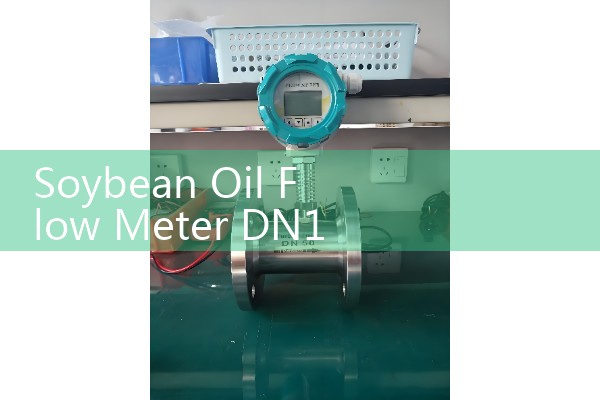
Last year a soybean oil refinery in Indonesia asked us to replace a differential-pressure flow meter on their deodorizer discharge line. The DP meter worked with an orifice plate and impulse lines. At start-up, steam condensation in the impulse lines caused a 20 percent reading offset every second batch. The oil temperature was 255 °C. The pipe was DN150, schedule 10 stainless steel. We supplied a Silver Instruments SM-CMF150 Coriolis meter with a PN16 flange. The plant installed it during a 4-day shutdown. After commissioning, the mass flow signal went straight to the DCS via 4-20 mA HART. The control room now sees real-time throughput and density trending on the same wire. Since then, they added 12 more meters to other oil lines in the plant.
Quick Quote: What Parameters to Prepare
To get an accurate price for a DN150 soybean oil flow meter, we need five data points from you. Tell us the operating pressure in bar, the oil temperature in degrees Celsius, the pipe size (DN150 or other), the flow range in kg/h or tons per hour, and the flange standard. Most deodorizer lines use ANSI 150 or PN16. If the area has a Zone 1 or Zone 2 classification, mention that. We include ATEX or IECEx certification when needed. A typical DN150 Coriolis meter for soybean oil deodorizing ships within 4 to 5 weeks after order confirmation. Silver Automation Instruments keeps a limited stock of DN150 meters in Malaysia for faster delivery to Southeast Asia, Australia, and the Middle East.
Frequently Asked Questions
Can I use an oval gear meter instead of a Coriolis on hot soybean oil?
You can, but oval gear meters with high-temperature bearings for 260 °C need frequent maintenance. For DN150, a Coriolis meter pays for itself in reduced downtime and higher accuracy.
What is the turndown ratio for the DN150 Coriolis meter?
Our SM-CMF150 gives a 20:1 turndown. You can measure from 10,000 kg/h up to 200,000 kg/h with the same meter and still stay within the specified accuracy.
How do we clean the meter between product changes?
The single straight-tube design can be cleaned with CIP media. Hot caustic solution or steam flush at 2 to 3 bar flows through the tube with no hold-up. The wetted material is 316L, fully compatible with food-grade cleaning chemicals.
Does the meter need an external RTD for temperature compensation?
No. The Coriolis sensor has a built-in PT1000 element that measures tube temperature. The transmitter continuously corrects for thermal expansion. No extra temperature sensor is needed on the pipe.
Can Silver Instruments support a site in the Middle East or Latin America?
Yes. We have distributors in Saudi Arabia, the UAE, Brazil, Mexico, and Argentina. They stock spare meters and can send an engineer for commissioning. We also provide remote support via WhatsApp or video call within 24 hours.
 Hot Blog
 Related AD