


 Current position > Product detail
『Calculation formula for pressure pipeline flow rate』Related information(clamp on meter|electromagnetic meter|venturi meterrotameter|orifice meter|ultrasonic flow meter|mass flow meter|coriolis mass flow meter|coriolis flow meter|magnetic flow meter|magmeter flow meter|magflow flow meter|mag meter flow meter|electromagnetic flow meter|vortex flow meter|turbine flow meter|thermal mass flow meter|thermal flow meter|rotameter flow meter)

What are the flow regulation methods for metering pumps?
2. Knowing pressure and pipe diameter to calculate flow rate
Conclusion: Flow rate=pressure x pipeline cross-sectional area x coefficient. In practical application, it is necessary to adjust the calculation based on pipeline material and fluid properties.. Traffic calculation can be broken down into three steps. Firstly, calculate the cross-sectional area based on the inner diameter of the pipeline: for circular pipelines, use π × (diameter Shen Yuan/2) ², while for other shapes, calculate according to geometric formulas. Next, confirm the pressure unit. In conventional engineering, 1MPa ≈ 10kg pressure. If Pascal is used, it needs to be converted to standard units. 1. Application scenarios of formulas: The commonly used formula for building water supply is Q=0.047d ² √ P (Q-m ³/h, d-mm), P-MPa)。 In HVAC engineering, additional consideration will be given to water flow velocity limitations, and the flow velocity of cold water pipes in civil buildings is usually controlled between 1.5-2.5m/s. Industrial pipeline design often introduces a correction factor of orange state, with a friction coefficient of about 0.02 for cast iron pipes and 0.015 for PVC pipes
2. In practical cases, using DN50 galvanized steel pipes (inner diameter 53mm) to transport 0.4MPa pressure tap water as an example: cross-sectional area=3.14 × (0.053/2) ²=0.0022 ㎡ theoretical flow rate=0.0022 × √ (0.4 × 10 ^ 6) × 3600 ≈ 28m ³/h Considering pipe wall friction, the actual flow rate is about 25m ³/h, which is equivalent to filling a standard bathtub (150L) per minute. The fluid temperature will affect the calculation results. The viscosity of water at 20 ℃ is about 1.
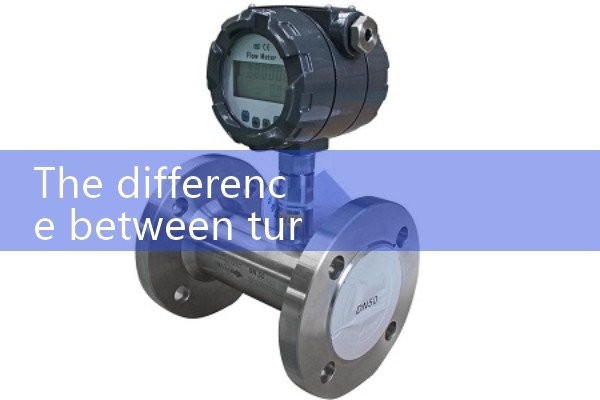
3. How to calculate the flow rate of a pressure pipeline
In depth exploration of the subtle correlation between flow rate, flow velocity, pressure, and diameter in pipelines. In understanding pipeline engineering, the relationship between flow rate, flow velocity, pressure, and pipeline diameter is not a simple formula operation.
. Firstly, the well-known flow formula is: flow rate Q=flow velocity v × pipe inner diameter d × pipe inner diameter d × π ÷ 4, which indicates that flow rate is closely related to flow velocity and there is a direct product relationship between the two. However, the question arises: Given the diameter D and pressure P of the pipeline, can the flow rate be directly calculated? The answer is not entirely true. The determination of flow velocity and flow rate in pipelines is not solely determined by pressure, but is influenced by the pressure gradient along the way, that is, the combined effect of fluid flow resistance and pipeline length. For example, imagine a pipeline end closed, with zero flow despite the presence of pressure P. This emphasizes the crucial role of pressure difference and pipeline length in flow calculation. The relationship between pressure and flow rate is not simply proportional, but is jointly shaped by pressure gradient and flow