

 Current position > News detail
『Flow Meter Water 2 Inch Sizing: Comparing In-Line Turbine, Vortex, and Flanged Electromagnetic Sensors』Related information(clamp on meter|electromagnetic meter|venturi meterrotameter|orifice meter|ultrasonic flow meter|mass flow meter|coriolis mass flow meter|coriolis flow meter|magnetic flow meter|magmeter flow meter|magflow flow meter|mag meter flow meter|electromagnetic flow meter|vortex flow meter|turbine flow meter|thermal mass flow meter|thermal flow meter|rotameter flow meter)
Flow Meter Water 2 Inch Sizing: Comparing In-Line Turbine, Vortex, and Flanged Electromagnetic Sensors
Quick Answer: For most DN50 water lines, a flanged electromagnetic flow meter is the safest first choice because it has no moving parts and handles dirty water, slurry, and varying flow. A turbine flow meter costs less and works on clean water with stable flow. A vortex flow meter works for hot water or high pressure lines but needs more straight pipe and a stable flow profile.
Engineers who size a 2 inch water flow meter often start with the pipe specification and skip the flow range. Here is the thing. DN50 does not mean 50 mm inside diameter for every meter. Some turbine and vortex meters use reduced bores. A full bore electromagnetic meter maintains the DN50 path. Your flow turndown and pressure loss change based on that detail.
Why 2 Inch Water Flow Meter Sizing Starts with Flow Range
A 2 inch line can carry very different water volumes. A cooling water line in a Vietnamese food plant may run at 4 to 12 m3/h. A washdown line in a Philippine bottling plant may surge between 1 and 25 m3/h. A bore water line in Australia may sit at 8 m3/h for hours and then stop. You need the minimum and maximum flow, not only the pipe size.
For DN50 water, typical sizing ranges look like this. Full bore electromagnetic meters from Silver Instruments cover 0.4 to 40 m3/h with an accuracy of ±0.5 percent of reading. In-line turbine meters cover 0.6 to 20 m3/h with an accuracy of ±0.5 to ±1.0 percent. Vortex meters need higher velocity, usually 1.5 to 30 m3/h, because the bluff body needs enough energy to shed vortices. If your minimum flow is below 1 m3/h, a turbine or vortex meter may not register it reliably.
In-Line Turbine Flow Meter for 2 Inch Water Lines
An in-line turbine meter is a mechanical meter with a rotor that spins in the water stream. It is a low cost option for clean water, cooling water, and RO permeate. The rotor sits directly in the flow path. Bearings and shaft wear over time, especially if the water contains sand or iron oxide.
We have seen this on customer sites many times. A groundwater user in Bangladesh installed a DN50 turbine meter on a bore line. The meter worked well for about six months. Then the reading became erratic because fine sand wore the bearing. For that case, a full bore electromagnetic meter solved the problem and eliminated the replacement parts.
Specifications for the Silver Instruments SIT50 in-line turbine meter include a 316L housing, tungsten carbide bearings, a pulse output, and optional 4-20 mA HART. It can handle water temperature up to 120 °C and pressure up to PN40. Straight pipe requirements are usually 10D upstream and 5D downstream. You also need a strainer or filter upstream to protect the rotor. The pressure drop is low but not zero. At 20 m3/h on a DN50 line, pressure drop can reach 0.3 bar depending on the rotor design.
Vortex Flow Meter for 2 Inch Water Lines
A vortex flow meter has a blunt body in the pipe. It counts the small vortices created downstream. No moving parts means less maintenance than a turbine. For clean water and hot water, a vortex meter works well. For water with solids or air bubbles, the vortex signal becomes noisy.
The Silver Instruments SVX50 vortex flow meter suits DN50 lines with flow from 1.5 to 30 m3/h. It can handle water temperature up to 150 °C and pressure up to PN40. Output options include 4-20 mA HART, pulse, and Modbus RTU. The meter needs 15D upstream and 5D downstream straight pipe. In practice, many DN50 water lines do not have that space. A pump skid or a pipe rack often gives only 5D to 8D before the meter. That is why many engineers skip a vortex meter for water unless the line is hot or the pressure is high.
Flanged Electromagnetic Flow Meter for DN50 Water Pipes
A flanged electromagnetic meter works by measuring the voltage generated when conductive water passes through a magnetic field. It has no moving parts and no obstruction in the pipe. This is the most robust option for raw water, wastewater, desalination feed water, and process water with some solids.
The Silver Instruments SFE50 flanged electromagnetic flow meter comes in DN50 with ANSI 150,
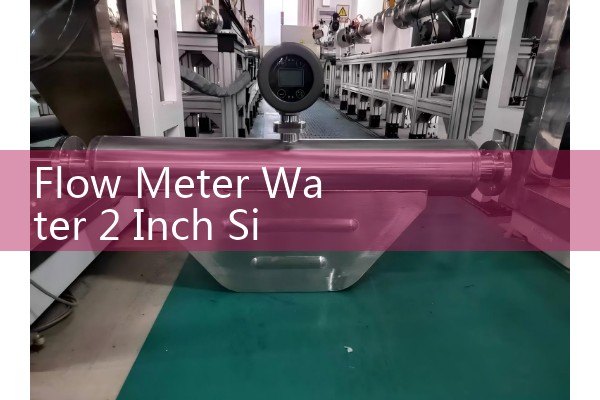
This meter also has a low flow cutoff. In a 2 inch line, choose 0.3 to 0.5 m3/h to avoid a false reading when the pipe is full but stagnant. The converter supports 4-20 mA HART, pulse, RS485 Modbus, and a local display. A remote mount version works for flooded pits. An IP68 sensor option is common for water pits in Southeast Asia and the Middle East.
Side by Side Comparison for DN50 Water
A turbine meter has the lowest purchase price. Add the cost of a strainer and periodic bearing replacement. A vortex meter has no moving parts but needs long straight runs and a stable velocity profile. A flanged electromagnetic meter has a higher purchase price and the lowest maintenance for most water types. Over a five year period, the total cost often favors the electromagnetic meter on dirty or intermittent water lines.
For clean RO water at 5 to 20 m3/h, the SIT50 turbine is enough. For hot water above 80 °C, the SVX50 vortex is a better fit. For raw water, wastewater, desalination feed, or water with solids, the SFE50 electromagnetic meter is the correct base selection.
Common DN50 Sizing Mistakes
Most engineers skip this part. A 2 inch pipe does not guarantee a 2 inch meter. Some low cost turbine meters have a reduced bore. If you install a DN40 meter with DN50 flanges, the pressure drop increases and the flow range decreases. Check the inside diameter and the K factor. For electromagnetic meters, ensure the pipe is full at all times. A partially filled DN50 pipe gives a poor reading because the electrodes need contact with the water. For vortex meters, cavitation at high temperature can destroy the bluff body. Keep the downstream pressure high enough to prevent flashing.
Five Frequently Asked Questions About 2 Inch Water Flow Meter Sizing
Q: What is the normal flow range for a 2 inch electromagnetic flow meter?
A: For Silver Instruments SFE50, plan for 0.4 to 40 m3/h. The best accuracy is usually between 1 and 35 m3/h on a DN50 line.
Q: Can a 2 inch turbine flow meter work with dirty water?
A: No. Turbine meters need clean liquid. Sand, rust, or suspended solids will wear the bearing and reduce repeatability. Use an electromagnetic meter for dirty water.
Q: Does a vortex flow meter need a long straight run on DN50?
A: Yes. Plan for 15D upstream and 5D downstream. That means about 750 mm upstream and 250 mm downstream for a 2 inch line. If space is tight, use an electromagnetic meter.
Q: What is the minimum conductivity for a 2 inch electromagnetic flow meter?
A: The Silver Instruments SFE50 needs around 5 µS/cm. Most municipal and ground water is well above this. Demineralized water and some condensate may not meet the threshold.
Q: Which 2 inch water meter has the lowest maintenance?
A: The flanged electromagnetic meter has the lowest maintenance among the three because it has no moving parts and no internal obstruction. The electrode may need cleaning in coating applications.
Sizing Checklist and Quote Request for DN50 Water Meters
Send us your water type, flow range in m3/h, pressure in bar, temperature in °C, pipe schedule, flange standard, and power supply. Tell us if you need ATEX Zone 1 certification for a hazardous area, IP68 for a flooded pit, or a remote display. We will recommend a model and connection type.
Silver Automation Instruments supplies DN50 turbine, vortex, and flanged electromagnetic water meters to users in Southeast Asia, Australia, the Middle East, Latin America, and Africa. Contact us for a price quote and a sizing sheet.
Tel: +86-25-68650347
Whatsapp: +86-25-52155837
WeChat: +86 15365082610
Web: flow-meter.com.au