

 Current position > News detail
『Oil Flow Meter 220V AC: Main Power Integration for Large Utility Facilities』Related information(clamp on meter|electromagnetic meter|venturi meterrotameter|orifice meter|ultrasonic flow meter|mass flow meter|coriolis mass flow meter|coriolis flow meter|magnetic flow meter|magmeter flow meter|magflow flow meter|mag meter flow meter|electromagnetic flow meter|vortex flow meter|turbine flow meter|thermal mass flow meter|thermal flow meter|rotameter flow meter)
Oil Flow Meter 220V AC: Main Power Integration for Large Utility Facilities
Quick Answer: For large utility facilities that meter fuel oil, heavy oil, or diesel on main pipelines, a Coriolis mass flow meter with 220V AC direct power is the simplest integration choice. Silver Automation Instruments supplies the SIL-COR series with universal 85–265V AC input, 4–20 mA HART output, and custody-transfer accuracy. Send us your pipe size (DN), fluid type, temperature, and flow range for a same-day quote.
Why 220V AC Power Matters in a Utility Fuel Line
Most large boiler houses, district heating plants, and backup power stations in Southeast Asia and the Middle East run their instrument panels on single-phase 220V AC. When you pull a flow meter into a main diesel or heavy fuel oil header, the last thing you want is a dedicated 24V DC power supply bolted to the wall. A separate DC supply means extra wiring, an extra fuse, and one more failure point during a cold start. This is exactly where a Coriolis meter with a built-in AC board saves hours of panel design.
We have seen this on customer sites many times. A power plant in the Philippines ordered three SIL-COR flow meters for their HFO lines. The site had 220V AC junction boxes right next to the pipe rack. They simply wired each meter to the existing AC circuit and set the 4–20 mA signals straight into the DCS. No converters, no extra cabinets.
What Makes the SIL-COR Series a Fit for Utility Fuel Oil
The SIL-COR Coriolis flow meter comes with a remote or compact transmitter that accepts 85 to 265V AC, 50/60 Hz. So 220V AC mains power is well within range. The meter measures mass flow directly, in kg/h or t/h, and gives you density and temperature as secondary variables. That density reading matters a lot when you switch between diesel and light fuel oil batches, because the energy content changes even if the volume stays the same.
Most engineers skip this part, but here is the thing. A turbine meter gives you volume pulses and needs a separate flow computer to correct for temperature. A positive displacement meter with pulse output still needs an external power source for the converter. With a Coriolis meter on 220V AC, you get compensated mass flow on a single pair of 4–20 mA wires. Less gear on the skid, fewer cables to trace during a trip.
Where These Meters Sit in a Large Facility
Think about a typical heavy oil circuit in a textile mill boiler room in Vietnam. The main storage tank feeds a ring header at 60 °C, pipe size DN80. Flow runs around 4,000 to 12,000 kg/h. The SIL-COR meter with DN50 or DN80 flanges drops right in between the strainer and the burner header. Because the meter has no moving parts, the viscosity change from 40 °C cold start to 95 °C steady operation does not shift the calibration. The mass flow reading stays within ±0.2 % of rate across the whole range.
In practice, we often recommend a heated version for heavy fuel oil. The meter body can be ordered with an integral electrical heating jacket that runs on the same 220V AC supply. That way the meter keeps the fluid above the pour point during shutdowns. Our team in Selangor recently commissioned two such meters for a palm oil refinery upgrading their utility steam boilers. The client reported consistent readings within two hours of startup, with zero blocked impulse lines.
Output Signals and DCS Integration
Standard output from the SIL-COR transmitter is 4–20 mA HART plus a configurable pulse output scaled for totalized delivery. Many utility SCADA systems prefer Modbus RTU over RS485, and the meter gives you that option on the
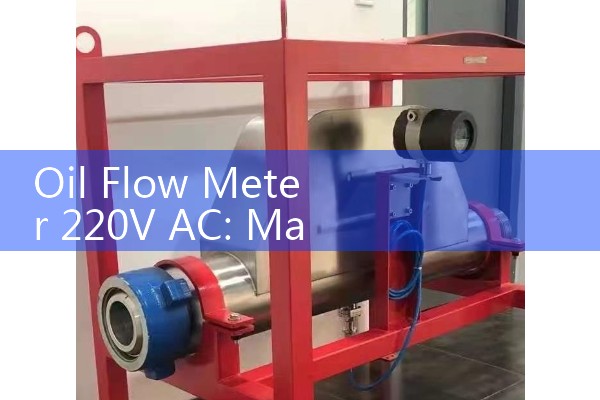
For ATEX Zone 1 areas near fuel unloading pumps, the flow meter is available with Ex d certification. The AC power supply is integrated inside the flameproof enclosure, so you do not need an external safety barrier for the power lines. This detail slashes the installed cost, especially for sites in the Middle East where hazardous area requirements are strict.
Real Numbers from a Customer Site
Last year a customer in Ghana asked us to replace an aging positive displacement meter on a backup generator fuel line. The old meter ran on 24V DC from a DIN-rail supply that failed twice during annual blackout tests. We quoted a SIL-COR DN25 Coriolis meter with 220V AC supply. Pipeline pressure was 12 bar, diesel temperature 35 °C, flow up to 2,200 kg/h. After the swap, the site manager reported that the generator fuel consumption log finally matched the tank dipstick readings to within 0.5 percent. The 24V supply is now permanently removed from that panel.
Quick Selection Guidelines
To size a Coriolis oil flow meter for your utility, we need four numbers. The normal and maximum flow rate, in kg/h or L/h. The operating pressure, in bar. The fluid temperature, because the meter sensor has a PT100 for density correction. And the pipe size, in DN. For heavy oil with viscosity above 100 cP, we often size the meter one line size down to keep the pressure drop acceptable. A DN80 meter in a DN100 pipe works well in most cases.
The SIL-COR series covers DN10 to DN200, process temperatures from -50 °C to +200 °C, and process pressures up to 100 bar. Power supply options are 24V DC or 85–265V AC, user selectable at order. Outputs include 4–20 mA HART, pulse, frequency, and RS485 Modbus.
Frequently Asked Questions
Can the flow meter handle heavy fuel oil with viscosity above 300 cP? Yes. Coriolis meters measure mass flow independently of viscosity. The SIL-COR meter performs reliably with heavy fuel oil up to 500 cP when the pipeline temperature is maintained above the pour point.
Do I need a separate flow computer if I use the 220V AC version? No. The transmitter computes mass flow, density, and temperature internally. The 4–20 mA signal represents mass flow already compensated. You only need a PLC or DCS card to read the signal.
What is the typical delivery time for a meter with 220V AC power option? For standard DN15 to DN100 sizes, Silver Automation Instruments keeps semi-finished stock in our Shanghai centre. We ship within 7 working days after order confirmation, including the AC power board configuration.
Is the flow meter certified for custody transfer in utility applications? The SIL-COR series can be supplied with an OIML R117 or MID MI-005 pattern approval certificate for custody transfer. You must specify this requirement at the time of inquiry so we allocate a certified sensor.
How do I request a quote with the correct power integration? Send us your fuel type (diesel, HFO, crude, etc.), normal flow range, pipe size (DN), operating temperature, operating pressure, and specify 220V AC mains power requirement. We will return a dimensional drawing with the wiring diagram within 24 hours.
For a firm quotation, email your parameters to [email protected] or visit our flow meter selection page and mention 220V AC power integration.