

 Current position > News detail
『Coriolis Mass Flow Meter Cost & ROI Analysis Guide』Related information(clamp on meter|electromagnetic meter|venturi meterrotameter|orifice meter|ultrasonic flow meter|mass flow meter|coriolis mass flow meter|coriolis flow meter|magnetic flow meter|magmeter flow meter|magflow flow meter|mag meter flow meter|electromagnetic flow meter|vortex flow meter|turbine flow meter|thermal mass flow meter|thermal flow meter|rotameter flow meter)
Coriolis Mass Flow Meter Cost & ROI Analysis: A Practical Guide for Plant Engineers and Procurement
Quick Answer: A Coriolis mass flow meter costs between USD 2,800 and USD 20,000 depending on line size, materials, and certifications. Medium-sized plants in the chemical, food, or oil and gas sectors typically recover the investment in 3 to 10 months through reduced product waste, lower maintenance, and billing accuracy. Send us your pressure, temperature, pipe size, and fluid type, and we will return a firm quotation within 48 hours.
How Much Does a Coriolis Flow Meter Really Cost?
Many instrument engineers ask for a price list. The truth is that Coriolis meter prices vary widely because you are not buying a commodity sensor. You are buying a precision mass and density instrument.
At Silver Automation Instruments, our inline Coriolis meters start around USD 2,800 for a compact DN10 model with stainless steel 316L wetted parts, PTFE seals, and a basic local display with 4-20 mA HART. A typical DN25 process meter with a remote transmitter and ATEX Zone 2 approval runs between USD 4,200 and USD 5,800. For larger custody transfer systems, like a DN80 meter with Hastelloy C22 tubes and an ATEX Zone 1 / IECEx certified remote transmitter, the cost can go up to USD 14,500.
These are not list prices pulled from the air. In the past quarter, a paint factory in Vietnam paid USD 4,850 for two DN20 meters to dose resin and solvent. A biodiesel plant in Colombia ordered a DN50 meter with a remote mount and paid USD 7,300 after a trade-in of their old turbine meter. Real numbers like these help you budget without a 30% safety margin.
What Drives the Price Up (and How to Keep It Down)
Line size is the biggest cost driver. A DN15 meter costs half of a DN50 meter because the sensor body and driver coils scale non-linearly. If your flow range allows, size the meter closer to the maximum expected flow rather than matching the pipe diameter. This often cuts 20 to 30 percent off the meter cost.
Wetted material matters. Standard 316L is fine for most fuels, solvents, and water-based fluids. If you handle warm seawater or acids, Hastelloy C22 or Super Duplex raises the price by 35 to 60 percent. Confirm the fluid chemistry with our application engineer before you invest in exotic alloys. A shrimp processing plant in Ecuador needed seawater flow measurement. Our team recommended 316L with a scheduled cleaning protocol instead of Hastelloy. They saved USD 2,100 on two meters and saw no corrosion after 14 months.
Certifications add cost. A basic ATEX Zone 2 increases the price by about 15 percent. ATEX Zone 1 with intrinsic safety pushes the total 30 percent higher. For a standard indoor food additive line, you can skip the hazardous area rating and keep the base price. We help you decide what is mandatory, not what is safe on paper.
ROI Scenarios: Where the Meter Pays for Itself Fast
ROI is not a marketing slide. Here are three real patterns we see on customer sites in Southeast Asia, the Middle East, and Latin America.
Scenario 1: Custody transfer of edible oils. A palm oil refinery in Indonesia sells crude palm oil (CPO) in lots of 300 tons at USD 850 per ton. Their old volumetric meter with density manual sampling had an uncertainty of 0.5 percent. That means per lot they gave away or overcharged by about 1.5 tons. At that price, the error cost them roughly USD 1,275 per shipment. With three shipments per month, they were losing over USD 3,800 monthly. A Silver Instruments Coriolis meter with 0.1 percent mass accuracy eliminated the guesswork. The USD 9,500 meter paid back in just 2.5 months. They also stopped the dispute calls with the buyer. That alone is worth the investment.
Scenario 2: Chemical batching in Mexico. A formulator blending surfactants for cleaning products used a magnetic flow meter and a separate manual densitometer. Each batch took 35 minutes, and the tolerance on active ingredient was plus or minus 2 percent. The plant replaced the setup with a DN25 Coriolis meter. Batch time dropped to 22 minutes because they measure both mass flow and density in real time. The active ingredient precision tightened to 0.3 percent, saving USD 180 per batch in raw material. With 12 batches per day, the savings hit USD 1,800 daily. The meter cost USD 5,600 and the ROI arrived in 3.1 days of production. In practice, installation and training consumed one shift. Even then, the full payback was under a week.
Scenario 3: Fuel consumption monitoring on a fishing vessel. A tuna boat operator in Ghana installed a DN15 Coriolis meter on the engine fuel supply line. The meter cost USD 3,100 plus a simple display. By monitoring real-time fuel mass flow, the captain optimized cruising speed and reduced diesel consumption by 9 percent. Monthly fuel savings of USD 400 gave an ROI of 7.8 months. Not lighting fast, but solid for a small marine operation.
Hidden Costs You Must Include in the Budget
Most engineers skip this part. A Coriolis meter is not a drop-in re
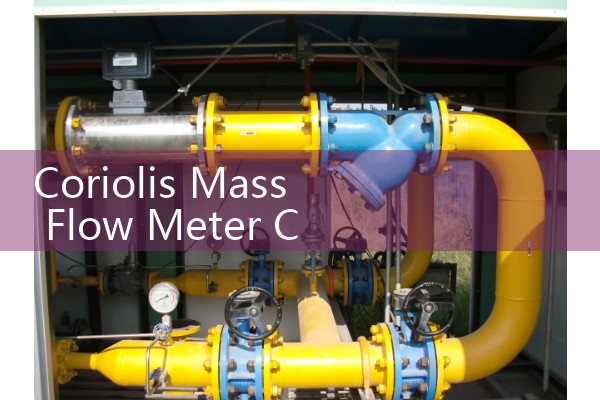
Installation kit. We include standard gaskets and bolts. If your pipework has excessive vibration, you need flexible connections or vibration dampeners. A set costs about USD 120 to USD 250. A mineral water plant in Jordan ignored this advice. The meter zero point drifted every three days. After adding dampeners, the drift disappeared. The small extra cost saved them hours of troubleshooting.
Startup and zero calibration service. The meter comes pre-calibrated from our workshop traceable to national standards. But field zero adjustment under process temperature and pressure is critical. We offer remote video support for free. If you want a factory engineer on site, the charge is USD 1,000 per day plus travel. Most customers in Saudi Arabia and Brazil handle the zero by themselves with our 15-minute video guide.
Communication converter. Your DCS may only accept Modbus RTU. Ensure the meter order includes the correct output option (RS485 Modbus, HART, or 4-20 mA). Retrofitting later costs about USD 180 for a signal splitter. Better to specify now.
Comparing Long-Term Costs: Coriolis vs. Turbine vs. Magnetic
Here is the thing. A turbine flow meter costs USD 1,200 for a DN50. A magnetic flow meter costs USD 1,800. A Coriolis meter costs USD 5,800. On day one, the Coriolis looks expensive. But calculate over five years.
Turbine meters need yearly recalibration, especially on dirty fluids. Recalibration at a certified lab costs about USD 400 per meter plus shipping downtime. Bearings fail and need replacement every 18 months on viscous service. Magnetic meters cannot measure non-conductive fluids like oils or solvents. They also struggle with low conductivity water. So you need two technologies for your blending station.
A single Coriolis meter measures mass, volume, density, and temperature. It works on conductive and non-conductive fluids. No moving parts, no filters or strainers upstream. No straight pipe run required. A sugar syrup plant in Thailand replaced a turbine meter and a separate densitometer with one Silver Instruments Coriolis meter. Over four years, they saved USD 3,100 in recalibration costs, USD 800 in spare parts, and USD 2,400 in reduced product giveaway. Total five-year extra cost of the turbine setup was USD 8,500 more than the Coriolis. And the Coriolis gave them density trending for brix control, which they did not have before.
How to Get a Concrete Quote in Under 48 Hours
Do not send a one-line email that says "price for Coriolis meter". We receive fifty of those per day and cannot help without data. Instead, give us these details and we return a firm, binding quotation with lead time and shipping cost to your port:
Fluid name and composition (clean water, diesel, brine, molasses, etc.)
Flow range: min, normal, and max (kg/h or L/h)
Process pressure (bar) and temperature (degree Celsius)
Pipe size (DN) and connection type (flange, tri-clamp)
Required output signals and hazardous area certification
Country and nearest port for freight calculation
Email this information to our team or fill the form on the Silver Instruments Coriolis product page. We quote directly from the factory, so there is no distributor margin and no hidden agent fee. Many SME buyers in Ghana, Vietnam, and Peru discover our prices are 30 to 40 percent lower than multinational brands for equivalent specifications.
Frequently Asked Questions
What is the shortest ROI you have seen for a Coriolis meter? A chemical batch plant in Malaysia recovered the cost in 3 days. They eliminated two offline quality checks per batch and reduced overfill. The meter paid for itself on the third shift.
Can Silver Instruments provide a meter for a trial period? We do not offer free trials, but we can sell a demo unit at a reduced price with a 60-day return option. You cover the return shipping. This gives you risk-free evaluation on your actual fluid.
Do I need a separate flow computer? No. Our remote transmitters include density calculation, net oil computation, and Modbus register mapping. For simple batching, the transmitter handles everything. A separate flow computer is only needed if you connect to a fiscal custody transfer system that demands a certified calculation module.
How much does recalibration cost after 2 years? We recommend calibration check every 18 to 24 months. If you return the meter to our lab, calibration costs USD 180 per unit plus shipping. Many customers never recalibrate because the Coriolis sensor has no drift. But for ISO 9001 audits, you can buy a field calibration verification kit from us for USD 450.
What certification does Silver Instruments hold for the Coriolis meter? Our meters come with ATEX, IECEx, and CE certifications as standard options. SIL certification for safety applications is available on request. All meters ship with a 5-point water calibration certifi