

 Current position > Product detail
『Nitrogen vortex flowmeter』Related information(clamp on meter|electromagnetic meter|venturi meterrotameter|orifice meter|ultrasonic flow meter|mass flow meter|coriolis mass flow meter|coriolis flow meter|magnetic flow meter|magmeter flow meter|magflow flow meter|mag meter flow meter|electromagnetic flow meter|vortex flow meter|turbine flow meter|thermal mass flow meter|thermal flow meter|rotameter flow meter)
1. What is the required diameter flow meter for delivering 400 standard cubic meters of nitrogen per hour? It is recommended to use a DN80 pipeline with a vortex flow meter to transport 400 standard cubic meters of nitrogen per hour. 1. According to the economic flow rate of industrial gases (10-30 m/s), the recommended pipe diameter for a flow rate of 400 Nm ³/h is as follows: * Flow rate of 10 m/s: pipe diameter ≈ 119 mm, corresponding to DN125 pipeline * Flow rate of 20 m/s: pipe diameter ≈ 84 mm, corresponding to DN80 pipeline (preferred recommendation) * Flow rate of 30 m/s: pipe diameter ≈ 69 mm, corresponding to DN65 pipeline. DN80 pipeline achieves a good balance between flow rate (about 20m/s) and pressure loss, and is a commonly used choice for this flow rate.
2. Flow meter selection for DN80 The main types and characteristics of flow meters applicable to pipelines are as follows: | Flow meter types | Characteristics | Applicability | |: --- |: --- | | Vortex flow meters | Simple structure, easy installation and maintenance, high accuracy, low pressure loss | Preferred recommendation, very suitable | Gas turbine flow meters | High accuracy, good repeatability, but high requirements for high dielectric quality and cleanliness, expensive | Suitable but high cost | Orifice flow meters | High reliability, wide application, but high pressure loss, relatively low accuracy | Available but not the most preferred | 3 Before finalizing the key selection parameters, the following operating parameters must be confirmed: * Working pressure: affects gas density and actual volume flow rate. *Working temperature: affects gas density and flowmeter material selection. *Nitrogen purity and cleanliness: determine whether
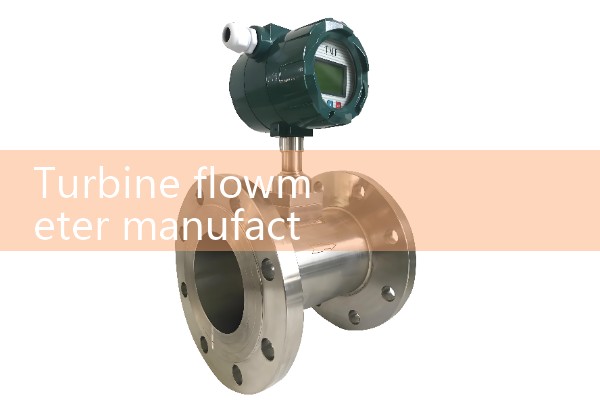
2. What are the differences between vortex street and turbine flowmeter?
The difference between a vortex flowmeter and a turbine flowmeter mainly lies in their working principle, applicable medium, cost, and application scenarios, as follows:
1. Differences in working principle. Vortex flowmeter: When fluid flows through non streamlined obstacles, periodic vortices (vortex streets) will be formed behind the obstacles.
. The vortex frequency is directly proportional to the fluid velocity, and the flow rate can be calculated by measuring the frequency. The formula is: f=Kv, where f is the vortex frequency, v is the flow velocity, and K is a constant related to the shape of the object and fluid properties. Turbine flowmeter: The fluid drives the turbine to rotate, and the turbine speed is proportional to the flow rate. The flow rate is calculated by measuring the speed. The formula is: Q=KN, where Q is the flow rate, N is the rotational speed, and K is a constant related to fluid characteristics and turbine design.
2. Differential vortex flow meters suitable for resolving quality issues: liquids such as water, oil, alcohol, chemical raw materials, etc. Gases: air, oxygen, nitrogen, natural gas, coal gas, etc. Steam: saturated steam, superheated steam. Characteristics: Strong adaptability to fluid types, capable of covering multiple media. Turbine flowmeter: gases: air, nitrogen, oxygen, hydrogen, biogas, natural gas, etc. Steam: Suitable for steam flow measurement. Liquids: Clean, low viscosity liquids (such as those in the