

 Current position > News detail
『Gas Flow Meter Calibration: Ensuring Accurate Low-Flow Readings』Related information(clamp on meter|electromagnetic meter|venturi meterrotameter|orifice meter|ultrasonic flow meter|mass flow meter|coriolis mass flow meter|coriolis flow meter|magnetic flow meter|magmeter flow meter|magflow flow meter|mag meter flow meter|electromagnetic flow meter|vortex flow meter|turbine flow meter|thermal mass flow meter|thermal flow meter|rotameter flow meter)
Gas Flow Meter Calibration: Ensuring Accurate Low-Flow Readings
Quick Answer: Accurate low-flow gas measurement depends on calibration against a traceable reference meter. Silver Instruments recommends annual calibration for thermal mass and Coriolis flow meters in applications below 10% of full scale. A field calibration with a master meter can reduce biogas or compressed air measuring errors from 5% FS down to 0.5% of reading.
Why Low-Flow Gas Measurement Is Tricky
Gas density shifts with temperature and pressure. At low velocities, the signal from vortex or turbine meters can drop below the cut-off threshold. A DN25 vortex meter might stop reading at 2 Nm³/h while the process still runs at 1.5 Nm³/h. So the operator gets zero flow on the display while gas keeps moving. That is a common call we get from food plants in Malaysia and water treatment sites in Australia.
Thermal mass flow meters solve part of this problem because they sense molecular heat transfer. They do not depend on mechanical rotation or vortex shedding. Silver Instruments supplies insertion and inline thermal mass flow meters with a minimum measurable velocity of 0.2 Nm/s. For biogas with high moisture, our inline model TMF-800 maintains ±1% of full scale down to 0.5 Nm³/h. But even this sensor drifts if the probe gets fouled or the calibration does not match the actual gas composition.
Real Calibration Data from a Customer Site
A paint manufacturer in Vietnam used our Coriolis mass flow meter (model CMF-015, DN15) to dose argon at 0.3 kg/h. The initial accuracy was ±0.2% after factory calibration with nitrogen. But after six months, the zero drifted by 0.08 kg/h. That is a 27% error at low flow. We performed a field zero calibration with argon at 2 bar and 25 °C. The error fell back to 0.05% of rate. This shows that low-flow gas measurement needs calibration under the exact process conditions, not just a standard factory run.
Calibration Methods That Work for Low Flows
Master meter comparison: A portable Coriolis meter can serve as a reference on site. We use a CMF-025 master meter with factory calibration traceable to NIST. The master meter gets installed in series with the meter under test. For a DN10 pipe measuring compressed air at 0.5 kg/h, the master meter must cover that range with at least a 5:1 turndown below the test point.
Sonic nozzle calibration: For very low flows below 0.1 kg/h, sonic nozzles provide a constant mass flow. This method works well for nitrogen, CO₂, and clean air
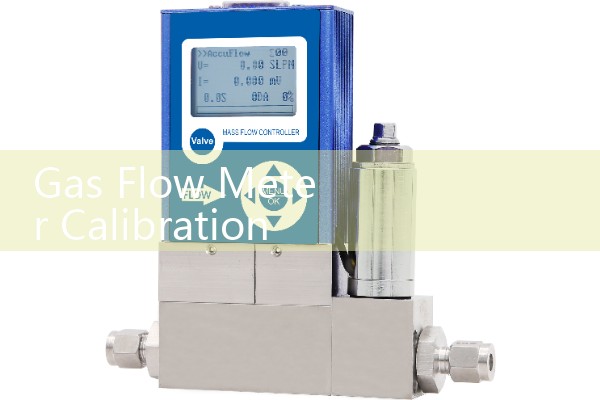
Gravimetric calibration: Weighing a reference gas cylinder over time gives a direct mass flow. This is the gold standard but slow. We use it to certify master meters at our lab.
When to Re-Calibrate Your Low-Flow Gas Meter
Most engineers skip this part. But we have seen drift in as little as three months if the gas contains siloxanes or hydrogen sulfide. For an Australian landfill gas project, recalibration every 6 months kept the Coriolis meter within ±0.5%. Without it, the error climbed to 2.1% after 8 months. For clean natural gas, annual calibration is usually enough. Silver Instruments offers offshore and onshore calibration services through our partners in Perth and Jakarta.
How We Calibrate Meters Before Shipping
Every Coriolis and thermal mass meter we sell gets a multi-point calibration. For a typical natural gas meter sized DN15 with a flow range of 0.3 to 30 kg/h, we test at 5 points: 0.3, 0.7, 3, 15, and 30 kg/h. The calibration gas is nitrogen, and we apply a gas correction factor for the target medium. The data gets stored on a calibration certificate with actual versus reference readings. We include a USB copy and a paper copy in the box.
FAQ on Low-Flow Gas Calibration
How often should I calibrate a thermal mass flow meter for biogas?
Every 6 months if the biogas has H₂S above 200 ppm. Otherwise, once a year.
Can I calibrate my vortex flow meter for low flows?
No. Vortex meters have a physical cut-off. For flows below 2 m/s, use a Coriolis or thermal mass meter instead.
Does temperature affect low-flow calibration?
Yes. A 10 °C change can shift the zero on a Coriolis meter by 0.05 kg/h. Always record the fluid temperature during field calibration.
What is the smallest gas flow you can calibrate?
Our lab can calibrate down to 0.02 kg/h with gravimetric methods. This covers applications like helium leak testing.
Do you offer on-site calibration in Southeast Asia?
Yes. We have service teams in Vietnam, Indonesia, and the Philippines. Send us your site details and gas composition.
Tell Us Your Process Conditions
Send us your pressure (bar), temperature (°C), pipe size (DN), and flow range. We will propose a meter with a calibration plan that fits your low-flow application. Email: [email protected] | Tel: +86-135-1213-1526 | Whatsapp: 86-135-12131526 | WeChat: +86 13512131526.