

 Current position > News detail
『Lard Oil Flow Meter Industrial Soap Manufacturing Controls』Related information(clamp on meter|electromagnetic meter|venturi meterrotameter|orifice meter|ultrasonic flow meter|mass flow meter|coriolis mass flow meter|coriolis flow meter|magnetic flow meter|magmeter flow meter|magflow flow meter|mag meter flow meter|electromagnetic flow meter|vortex flow meter|turbine flow meter|thermal mass flow meter|thermal flow meter|rotameter flow meter)
Lard Oil Flow Meter for Industrial Soap Manufacturing Controls
Quick Answer: Silver Automation Instruments supplies positive displacement oval gear flow meters for lard oil in soap plants. These meters handle viscosities up to 2000 cP and deliver batch repeatability within 0.5 percent. Send your pipe size, temperature, pressure and flow range for a direct quotation from our application team.
Why Lard Oil Demands a Specific Flow Meter
Lard oil is not like water or diesel. At process temperatures between 45 degree Celsius and 60 degree Celsius it still holds a viscosity of 30 to 50 centipoise. A turbine meter would slip. A vortex meter would not even generate a readable signal. Soap producers need a meter that captures every litre of hot fat with predictable, gear-driven displacement. Oval gear meters do exactly that. They trap a fixed volume between the oval rotors and the chamber wall. Each rotation equals a precise quantity, no matter if the lard is slightly thicker in the morning or thinner after the steam trace warms up.
Where the Meter Sits in a Soap Batch Process
In a typical saponification kettle, lard oil arrives from a bulk storage tank through a heated pipe. The flow meter sits downstream of a strainer and upstream of a shut-off valve or control valve. The batch controller opens the valve, the oval gear meter sends a 4-20 mA HART signal to the PLC, and the system stops flow once the target weight is reached. Many plants also use a PT100 integrated into the meter body to compensate for density shifts. Because lard solidifies under 30 degree Celsius, the meter body is often jacketed with electrical heating or low-pressure steam tracing. Silver Instruments supplies oval gear meters with factory-fitted heater ports for DN15, DN25 and DN40 lines.
Oval Gear vs. Coriolis for Lard Oil Measurement
A Coriolis mass meter reads mass flow directly, which is great if you need to measure lard density on the fly. But most soap manufacturers we work with in Vietnam and Indonesia prefer oval gear meters. The reason is simple. A DN25 oval gear meter from Silver Instruments costs a fraction of a comparable Coriolis and still gives them batch consistency below 0.5 percent over a year. Maintenance teams also find the oval gear design easy to open, clean and reassemble when lard residue builds up. If your soap plant uses mixed streams of tallow, palm stearin and lard, a Coriolis meter makes sense for multi-product flexibility. For dedicated lard oil lines, oval gear remains the practical choice.
Silver Instruments Oval Gear Model for Fat Service
Our primary recommendation is the SILVER OGF-I oval gear flow meter. You can specify it in cast steel or 316L stainless steel with PEEK or graphite rotors. Accuracy is 0.5 percent of reading for viscosities from 5 to 2000 cP. Output options include pulse, 4-20 mA with HART, and RS485 Modbus. The meter comes in DN10 through DN50, covering flow ranges from 0.5 litres per minute up to 200 litres per minute for lard oil. ATEX and IECEx certifications are available for Zone 1 and Zone 2 environments where solvent vapours could be present. The OGF-I can also be ordered with an integrated PT100 and a local display that shows litres, kilograms or total batch volume.
A Soap Maker in Indonesia Got Rid of Ba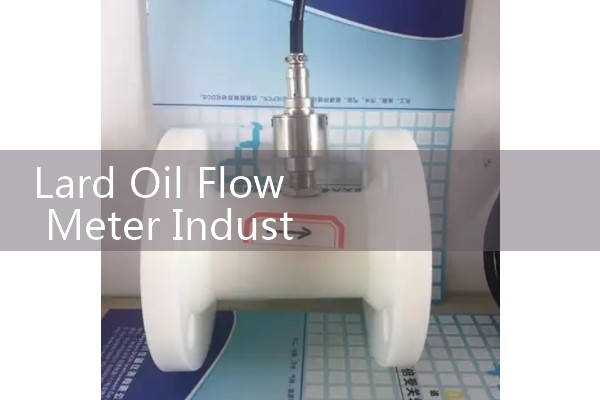
Last year a medium-size soap manufacturer near Surabaya contacted us. They had been using a paddle wheel meter on a DN25 lard oil line. The meter reading jumped every time the lard temperature dropped a few degrees. After switching to a Silver Instruments DN25 oval gear meter with a steam-jacketed housing, their batch overfill incidents stopped completely. Here is the thing. We have seen this on customer sites many times. A simple switch to a positive displacement meter removes the viscosity guessing from the control loop. This plant now runs 16 batches per day with a repeatable fat charge of 245 kg per batch and a variation under 0.8 kg.
Installation Rules That Keep the Meter Healthy
Do not install the oval gear meter without a Y-strainer directly upstream. Lard oil carries fine meat residues and carbonised particles from storage. Those particles can lock the rotors. Keep the meter body warm even during idle times with a low-wattage heater or steam trace. Oval gear meters do not need long straight pipe runs. A DN25 meter operates well with three diameters of straight pipe upstream and two downstream. Mount the meter so the rotors stay submerged in liquid when the line is closed. This prevents air from accelerating wear on the gear surfaces when flow restarts.
Frequently Asked Questions
Will the oval gear meter lose accuracy if lard oil viscosity changes during a batch?
No. Oval gear meters maintain rated accuracy across a wide viscosity band. For lard oil that varies between 30 and 100 cP, the volume-per-pulse output stays stable. We recommend a meter with a built-in PT100 if your process temperature fluctuates more than 15 degree Celsius.
What is the lowest flow a DN15 oval gear meter can measure with lard oil at 50 degree Celsius?
The DN15 OGF-I meter reliably measures from 0.5 to 2 litres per minute, depending on back pressure and pipe fill. For pilot plants running test batches, we can supply a special low-flow rotor set that extends the turndown to 0.2 litres per minute.
Can your oval gear meter be used in a soap plant with ethanol vapours in the air?
Yes. Silver Instruments offers ATEX Ex ia and Ex d versions of the OGF-I for gas Zone 1 and dust Zone 21. The transmitter casing is fully sealed, and the terminal box accepts intrinsically safe wiring practices.
How do I prevent lard oil solidification inside the meter body overnight?
Use an electric heater jacket with a thermostat set to 50 degree Celsius or run low-pressure steam through the optional tracing channels. Our meters can ship with a factory-assembled heating block and insulation layer.
How do I get a price for a lard oil flow meter for my soap line?
The price depends on pipe diameter, material, temperature sensor and hazardous area certification. Send us your pipe size (DN), lard oil temperature in degree Celsius, flow range in kg/h or litres per minute, and process pressure in bar. We will return a quotation within one working day.
To specify your meter, send us the four numbers: pipe size (DN), temperature (degree Celsius), flow range (kg/h) and pressure (bar). See the oval gear flow meter series at flow-meter.com.au. Our engineers select the right meter for your soap batch controls and send a quotation immediately.